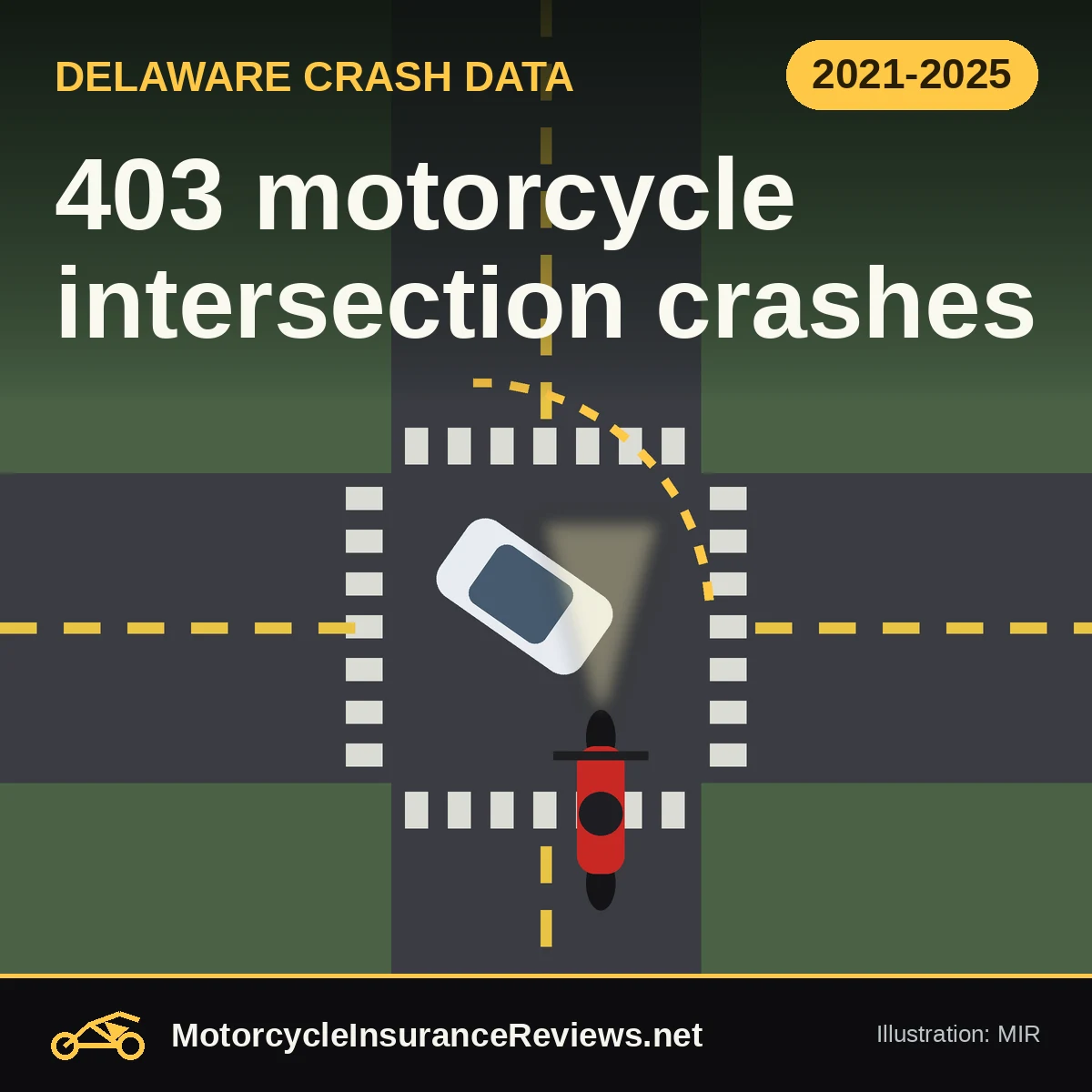
Delaware's crash records show that intersections were the site of a large share of the state's fatal motorcycle crashes. The state's Office of Highway Safety (OHS) reports that from 2021 through 2025 there were 403 motorcycle crashes at or related to intersections, 42 of them fatal. Over the same five years, OHS says 42% of fatal motorcycle crashes happened at intersections.
OHS released the figures on Sept. 9, 2026, when it launched two fall safety campaigns, one aimed at drivers and one at riders, at a press event at Blue Collar Custom Cycles in Frederica. The timing was tied to Delmarva Bike Week in Ocean City, Maryland (Sept. 9–13), which OHS said draws more than 100,000 riders and sends extra motorcycle traffic through Delaware. The rally is over, but the five-year numbers show where and when reported motorcycle crashes clustered.
Key points (2021–2025, per Delaware OHS):
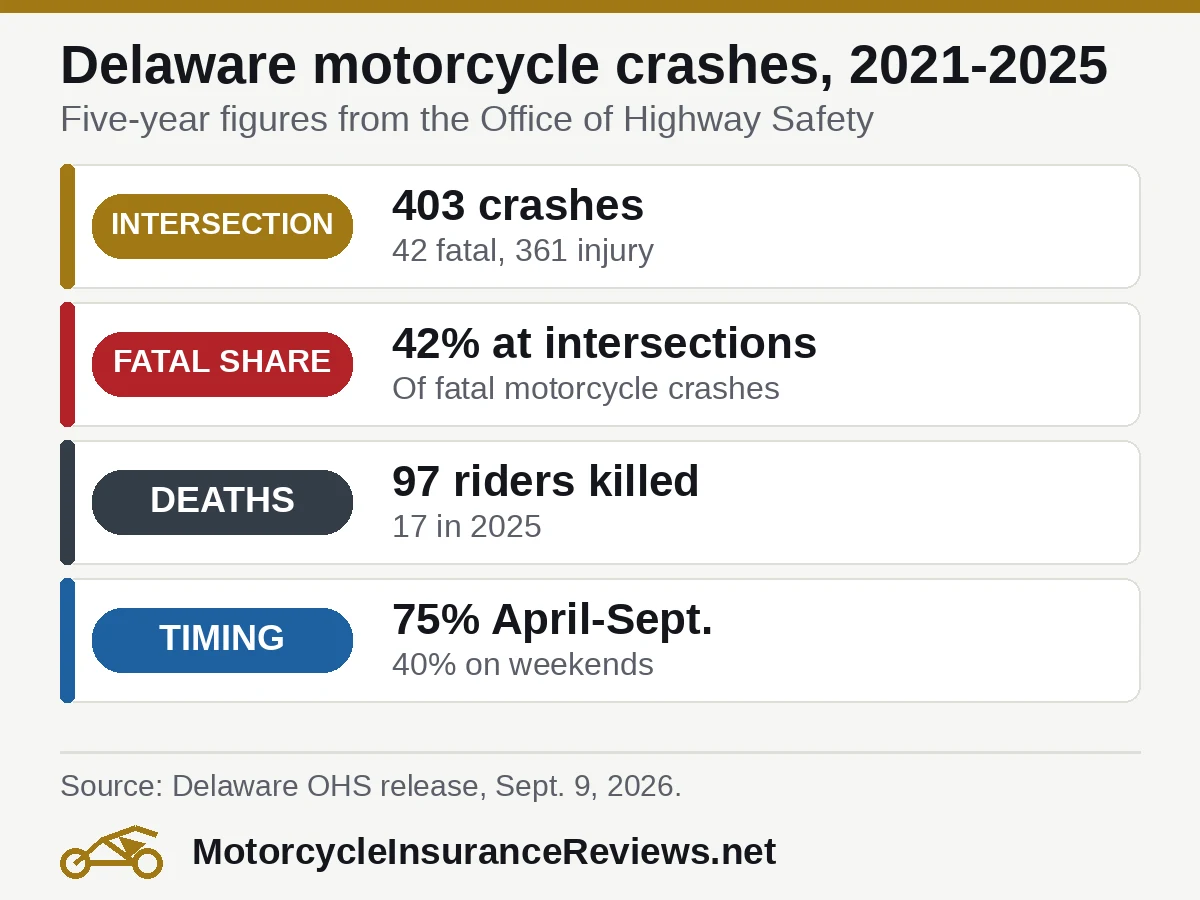
- 403 intersection or intersection-related motorcycle crashes: 42 fatal and 361 with injuries.
- 42% of fatal motorcycle crashes happened at intersections.
- 97 motorcyclists died statewide, including 17 in 2025.
- 56 of those killed were wearing helmets, 34 were not, and 7 are unknown.
- 40% of motorcycle crashes happened on weekends, and 75% between April and September.
Intersections are where the risk concentrates
The 403 crashes include both crashes in the intersection itself and those OHS classifies as "intersection-related," such as crashes on the approach. Of those 403, 361 caused injuries and 42 were fatal.
It's worth being exact about what these numbers count. Fatal crashes are crash events. Fatalities are people. A single fatal crash can kill more than one person, so the 42 fatal intersection crashes and the 97 motorcyclists killed statewide aren't the same kind of number.
OHS didn't break down how the intersection crashes happened. But the classic intersection crash for riders is well known: a driver turning left across the path of an oncoming motorcycle, or pulling out from a side street, because they misjudged its speed or didn't see it. That's why the driver half of the campaign leans so heavily on looking, and looking again, before turning.
Fatalities, helmets and the 2026 count
OHS counts 97 motorcyclists killed in Delaware from 2021 to 2025, with 17 deaths in 2025.
Of the 97 riders who died, 56 were wearing helmets, 34 were not, and seven are unknown. OHS puts helmet use at 58%, which matches the share of those 97 riders who were wearing one. These numbers describe riders who were killed. They aren't a survey of how many Delaware riders wear helmets overall, and on their own they can't tell you how much a helmet changed anyone's odds. Crash speed, what the rider hit and other injuries all matter.
As of Sept. 2, 2026, OHS had recorded 15 motorcycle deaths so far this year. That's a partial-year count, so it can't be compared directly with a full year like 2025's 17.
Weekends and summer carry most of the crashes
Two timing figures stand out. OHS says 40% of motorcycle crashes from 2021 to 2025 happened on weekends, and 75% happened between April and September. The report doesn't give mileage by day or season, so these figures don't establish when riding is riskier per mile. It does tell you when crashes, and enforcement and awareness campaigns, cluster.
What OHS is telling riders
The rider campaign's advice is mostly about gear and the bike itself:
- Wear a DOT-compliant helmet, plus eye protection, protective clothing and boots.
- Do a pre-ride check of tires, controls, lights, fluids, chassis and the side stand.
"Riders should stay alert, ride responsibly, and make themselves visible," said Sharon Bryson, OHS director. Steven Baker, owner of the Frederica host shop, told riders to "make yourself visible, follow the speed limits, keep your hands on the handlebars, and your eyes on the road."
Given that intersections account for 42% of the state's fatal motorcycle crashes, two habits are worth adding at every junction: cover your brakes as you approach, and assume the driver waiting to turn hasn't seen you until their wheels tell you otherwise.
What OHS is telling drivers
The driver campaign asks people sharing the road to:
- watch for motorcycles,
- keep a safe following distance,
- check blind spots twice,
- look carefully before turning, and
- remember how vulnerable a rider is in any collision with a car.
More campaign material is on OHS's Arrive Alive DE site under "Respect the Ride."
Why this matters for your coverage
An intersection crash usually involves another vehicle, and fault isn't always clear. If the other driver is uninsured or carries only the minimum, check your policy for uninsured/underinsured motorist coverage. Also check what your own policy pays toward medical expenses after a crash, including any supplemental medical coverage. For the state's required minimums and how they apply to riders, see our guide to Delaware motorcycle insurance requirements.
References
- Delaware Office of Highway Safety: Delaware Office of Highway Safety (OHS) Gears Up For The Annual Delmarva Bike Week Event (Sept. 9, 2026) — the state release with 2021–2025 intersection, fatality, helmet, weekend and seasonal crash figures, the 2026 partial-year count, and the driver and rider campaign tips.