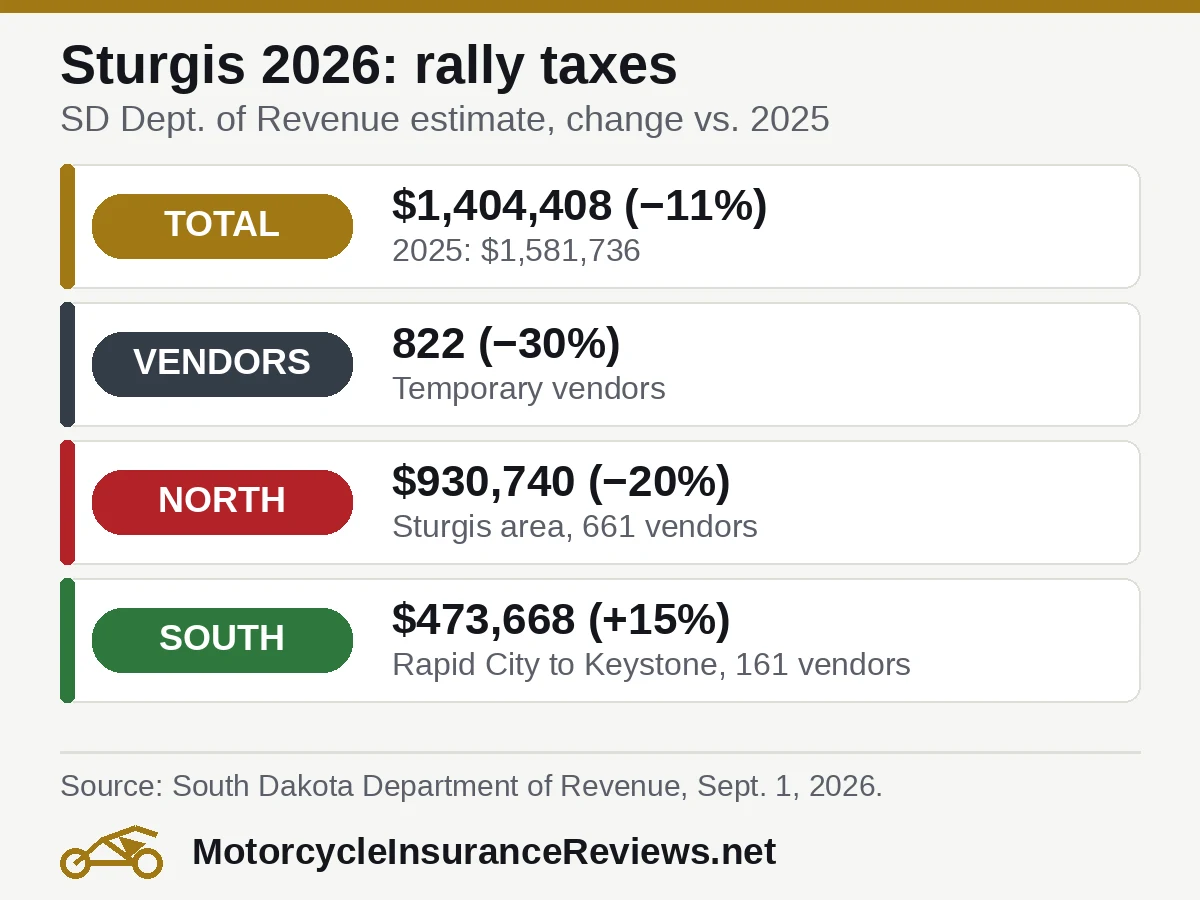
South Dakota collected less tax from the 2026 Sturgis Motorcycle Rally than the year before. The state Department of Revenue estimates the August rally brought in $1,404,408, down 11% from $1,581,736 in 2025.
The department released the numbers on Sept. 1, 2026. It's a look back at this summer's rally, and the more interesting part is underneath the total: tax collections fell around Sturgis and rose in the southern Black Hills.
Key points:
- Total collections: $1,404,408 in 2026, down 11% from 2025.
- Fewer vendors: 822 temporary vendors, 30% fewer than in 2025.
- North down: the Sturgis area's 661 vendors generated $930,740 in tax, down 20%.
- South up: Rapid City, Custer, Hill City and Keystone's 161 vendors generated $473,668, up 15%.
- The state's explanation: slower overall rally traffic, which meant less vendor activity and lower taxable sales.
Where the money came from
The state's total is made up of four taxes:
- State sales tax: $796,998, still the biggest piece, down from $901,513 in 2025.
- State tourism tax: $275,598.
- Municipal sales and gross receipts taxes: $331,812 combined.
Those add up exactly to the $1,404,408 total. The state sales tax fell about 11.6%, in line with the overall drop.
Keep in mind what this measures. It's tax collected on taxable sales during the rally, not how much vendors earned and not how many people showed up. The state doesn't publish an attendance count in this report, so the tax figures can't tell you how much attendance changed.
North versus south
This is where the numbers get useful if you ride the rally.
The Northern Black Hills covers Sturgis and the surrounding communities in Meade and Lawrence counties. That's still where most of the rally's taxable business happens: about two-thirds of the 2026 total. But it was also where the decline hit. Vendors there generated $930,740 in tax, 20% less than in 2025.
The Southern Black Hills, which the department defines as Rapid City, Custer, Hill City and Keystone, went the other way. Its 161 vendors generated $473,668, 15% more than in 2025.
The report doesn't explain the shift or establish whether more riders stayed in the southern Black Hills.
What the vendor drop means
The 822 temporary vendors in 2026 were 30% fewer than the year before. That's a steeper fall than the 11% drop in tax collected.
The state ties both to the same cause: slower rally traffic led to less vendor activity. The vendor count measures participation by temporary sellers.
If you go for the shopping and the street scene, here's what changed: the rally had 30% fewer temporary vendors overall in 2026, and tax collections in the Northern Black Hills fell 20%. That's now an official number, not just a feeling. The report doesn't give separate vendor counts by region for 2025, so it doesn't say how much of the vendor drop fell on Sturgis itself.
What this doesn't tell you
- Attendance: the Department of Revenue report gives no rider count.
- Rider spending: it measures taxes, not what individual riders spent.
- Lodging: nothing in the report covers hotel or campground availability.
- 2027: there's no forecast. One weaker year doesn't set a trend.
For riders planning next August, the useful signal is the geography. The southern Black Hills, closer to Rapid City and the Custer and Keystone areas, held up better in 2026 than the rally's home base.
References
- South Dakota Department of Revenue: $1.4 million in tax collections from 2026 Sturgis Motorcycle Rally (Sept. 1, 2026) — the state's estimate of rally tax collections by tax type, temporary vendor counts, and the Northern versus Southern Black Hills breakdown, with year-over-year changes.