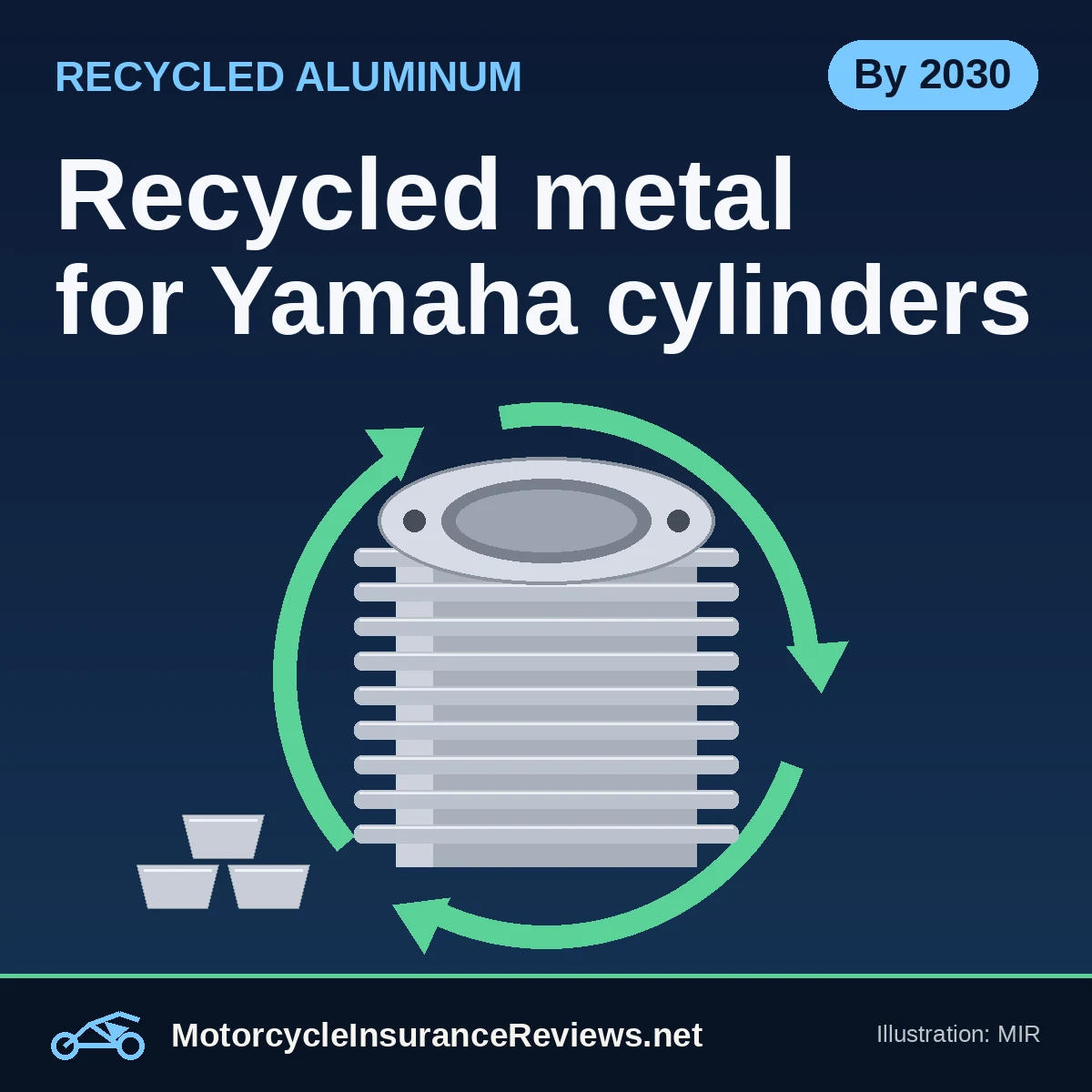
Yamaha is changing what goes into one of its signature engine parts. On October 6, 2026, the company said it will progressively switch its DiASil cylinders from virgin aluminum to a recycled aluminum alloy, starting with commuter models built in Indonesia and rolling out globally from there.
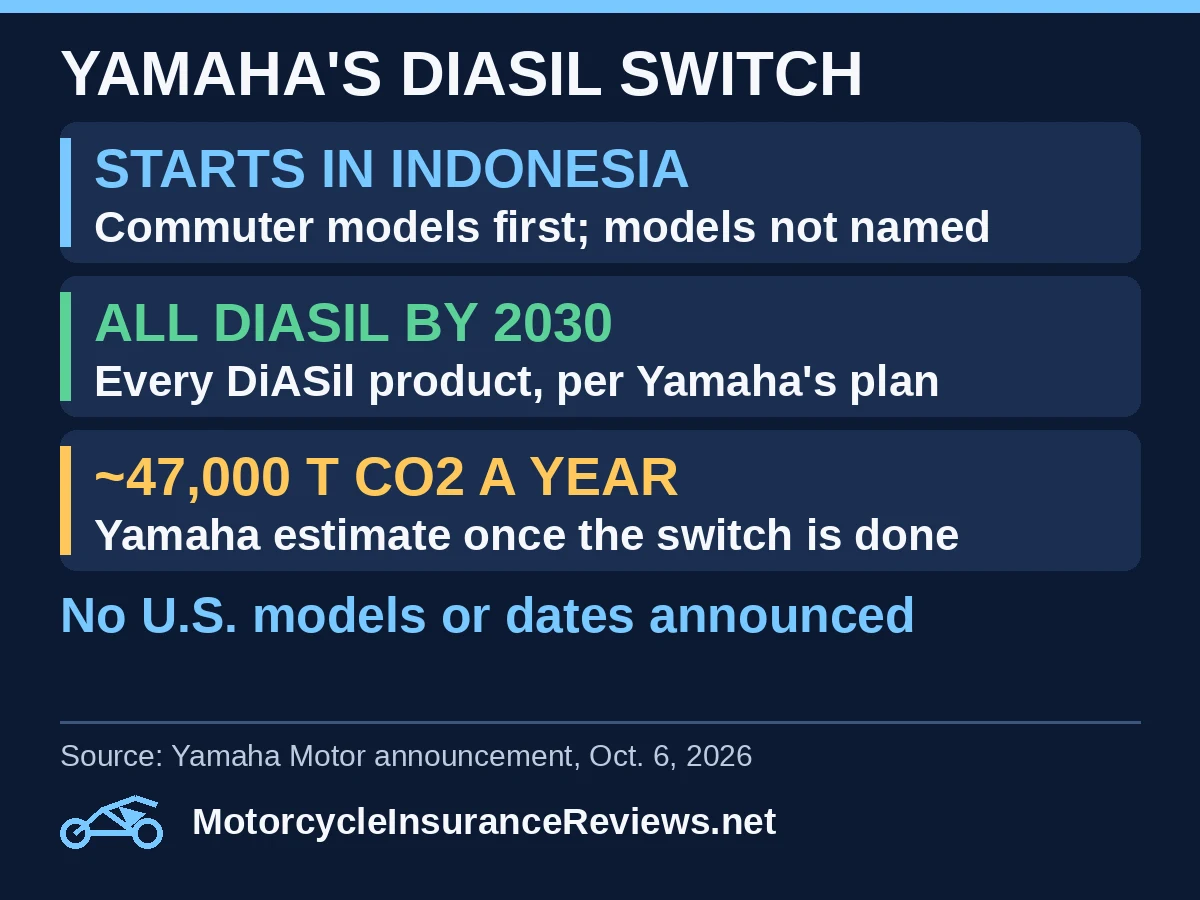
Yamaha's target is to have every product that uses a DiASil cylinder on the recycled alloy by 2030. Once that switch is complete, the company estimates it will cut about 47,000 tons of CO2 a year.
Nothing about how you ride or service a Yamaha changes today. But it's a real production change to a core engine part, and it shows where motorcycle sustainability work is heading: less about tailpipes, more about the material that goes into the bike.
The short version
- What changes: the raw material for DiASil cylinders, from new (virgin) aluminum to a recycled alloy Yamaha developed for the job.
- Where it starts: commuter models produced in Indonesia. Yamaha hasn't named the models.
- Where it ends: all DiASil-equipped products by 2030, according to Yamaha's plan.
- The estimate: about 47,000 tons of CO2 per year once the transition is finished. That is Yamaha's forecast for the completed changeover, not a saving it is booking today, and it is not a tailpipe figure.
- U.S. impact: none announced. Yamaha's release names no U.S. models, dates or prices.
What a DiASil cylinder is
Most motorcycle engines with aluminum cylinders still need something harder where the piston rubs. That's usually a pressed-in iron sleeve or a hard plating on the bore.
DiASil skips both. It's an all-aluminum cylinder made from a high-silicon alloy, so the bore surface itself does the wear-resistant work. Yamaha says it was the first company in the world to develop and put this design into production, in 2002.
The company lists the benefits it sees in the design:
- Wear and seizure resistance
- Better heat dissipation
- Lower weight
- Easier recycling
- Lower manufacturing cost
Those are Yamaha's claims for the design in general. The October announcement is about the metal it's made from, not a new cylinder design.
Why recycled aluminum is harder than it sounds
Recycled aluminum carries more impurities than freshly smelted metal. For a part like a cylinder, where the bore surface has to survive heat, friction and corrosion for years, that matters.
Yamaha says it designed the new alloy using thermodynamic calculations so it would meet the cylinder's needs for microstructure, surface properties and corrosion resistance. It then ran repeated bench tests and vehicle evaluations. In its words, "the recycled alloy met all functional requirements, leading to the decision to put the material into practical use."
That is Yamaha's own testing. No independent durability data has been published, and the company hasn't said what share of the new alloy is recycled content.
Why start with commuters in Indonesia
Yamaha didn't explain the choice in detail, but the logic is easy to follow. Indonesia is a very large motorcycle market, and small commuter bikes are built there in big numbers. A material change on high-volume models reaches a lot of cylinders quickly.
It also means the first recycled-alloy cylinders are likely to be on bikes most U.S. riders will never see in a showroom. Whether and when the change reaches U.S.-market Yamahas is something the company hasn't said.
The bigger Yamaha goal
The DiASil switch sits inside a broader target. Yamaha says it wants to switch 100% of the aluminum raw material used in its own manufacturing to sustainable alternatives by 2030, at its major production bases in Japan and overseas.
Keep the two goals separate:
- DiASil plan: every product using a DiASil cylinder moves to the recycled alloy by 2030.
- Wider aluminum goal: all aluminum raw material in Yamaha's own manufacturing at major bases moves to sustainable sources by 2030.
The 47,000-ton estimate is tied to the first one. It doesn't cover every Yamaha engine, and not every Yamaha engine uses DiASil.
What it means if you own or are shopping for a Yamaha
For now, practically nothing changes:
- Maintenance: Yamaha hasn't announced any change to service intervals, oil specifications or rebuild procedures.
- Performance: there's no claimed change in horsepower, fuel economy or weight.
- Parts: no change to parts numbers or availability has been announced.
If you do your own engine work, nothing in the announcement changes the procedures for your bike. Your owner's or service manual is still the reference for what applies to your model.
What we don't know yet
- Which models are first. Yamaha only said "commuter models produced in Indonesia."
- When U.S. models change. No dates or models for the U.S. market have been announced.
- Recycled content. Yamaha hasn't given a percentage.
- Independent results. All durability claims come from Yamaha's own tests.
Bottom line
Yamaha will move its DiASil cylinders to a recycled aluminum alloy, starting with Indonesian-built commuters and reaching every DiASil product by 2030. Its 47,000-ton annual CO2 estimate applies once that's done. For riders, the change is invisible for now, and Yamaha says its own testing shows the new alloy meets the part's requirements.
References
- Yamaha Motor: Recycled aluminum alloy adopted for DiASil cylinders (October 6, 2026) — material switch, Indonesia start, 2030 target, CO2 estimate, DiASil history, testing and wider aluminum goal.