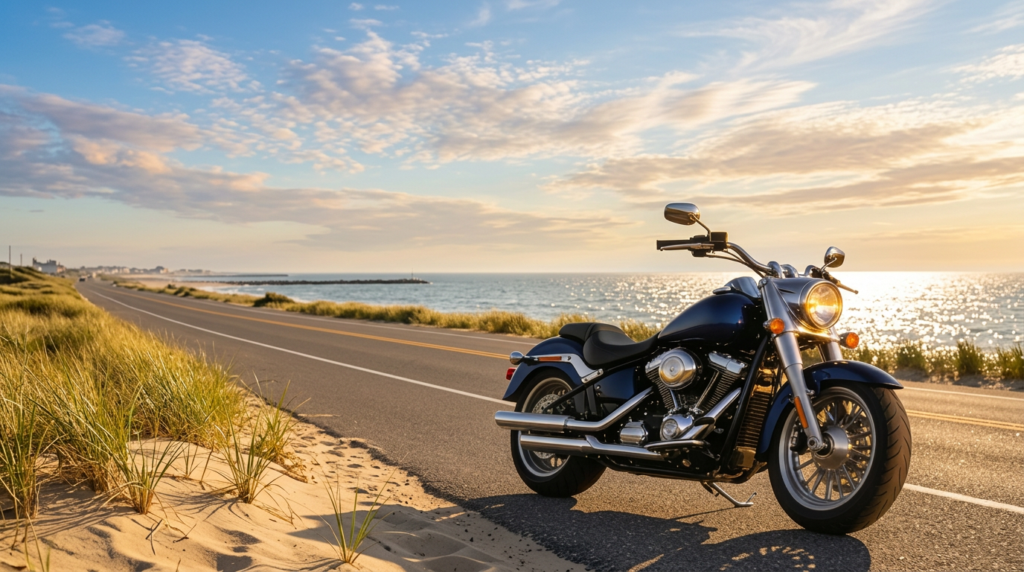
New Jersey motorcycle insurance at a glance:
No-fault/PIP: Not for riders
Helmet law: Universal
Lane splitting: Illegal
New Jersey motorcycle insurance is easy to misunderstand. The state raised the minimum liability requirement to 35/70/25 in 2026, but that is where clarity ends. New Jersey operates a no-fault auto insurance system where drivers recover economic losses (medical bills, lost income) regardless of fault, but the same no-fault framework explicitly excludes motorcycle riders. That means a rider who gets hurt in a crash cannot access the first-party benefits that car drivers take for granted. The state also strictly enforces registration and coverage rules, helmet laws are universal, and crash data shows motorcycle fatalities and serious injuries remain elevated even with state-mandated safety rules in place.1, 2, 3, 4, 12, 17
For anyone publishing a New Jersey motorcycle insurance guide, the right frame is this: the state just raised minimum liability limits, the no-fault carveout for riders is a real problem that separates New Jersey from many other states, enforcement against uninsured vehicles is aggressive and can happen through registration systems even without a traffic stop, helmet use is required for operators and passengers, lane splitting is not permitted, and riders with lower skill or higher risk profiles can face significantly higher premiums. That combination is what makes New Jersey motorcycle insurance worth explaining carefully rather than treating as a standard generic topic.1, 2, 4, 12, 17
New Jersey motorcycle insurance requirements in 2026
Effective January 1, 2026, New Jersey raised the minimum liability insurance requirements for motorcycles. The new standard is $35,000 for bodily injury to one person, $70,000 for bodily injury to all persons injured in one accident, and $25,000 for property damage to someone else’s vehicle or property. These limits apply to all motorcycles registered in New Jersey, and the bike must be insured by a company licensed to do business in the state. The registration fee for a motorcycle in New Jersey is $65.1, 2, 3, 5, 10
The reason the limits changed is worth understanding for context. New Jersey’s Department of Banking and Insurance (DOBI) issued Bulletin 25-06 to announce the increase, citing crash data and market conditions that warranted higher minimum protection. Before 2026, the old minimum was much lower: $15,000 for bodily injury per person, $30,000 for bodily injury per accident, and $5,000 for property damage. The jump from 15/30/5 to 35/70/25 is substantial, and it signals that the state believes riders and third parties need significantly better protection than before.1, 2
Important shift: If you are comparing 2025 quotes to 2026 quotes, the minimum-limit change alone will affect pricing and policy comparisons. Carriers must rewrite and price for the new minimums as of January 1, 2026, and riders shopping now should verify they are looking at 35/70/25 quotes, not the old 15/30/5 limits. Many riders did not realize the change happened, and a rider renewing in 2026 on an old declaration page can accidentally be underinsured.[1]
Does New Jersey no-fault apply to motorcycles?
This is the single most important coverage issue for New Jersey motorcycle riders, and it is also the one most riders get wrong. New Jersey is a no-fault state. In the ordinary auto insurance context, that means drivers injured in crashes recover medical expenses, lost income, and other economic losses from their own insurance policy, regardless of who caused the accident. But the New Jersey Department of Banking and Insurance explicitly excludes motorcycle riders from this protection. The DOBI’s guidance and formal bulletins make clear that motorcycle policies are not required to include the Personal Injury Protection (PIP) benefits that apply to car drivers.1, 2
The practical effect is stark. A car driver in New Jersey who is injured by an uninsured driver can still recover from their own PIP coverage. A motorcycle rider injured by an uninsured driver, or injured in a crash where the other driver is found to be partly at fault, has no equivalent first-party recovery path. The rider must pursue the at-fault driver’s liability policy or, if the at-fault driver is underinsured or uninsured, pursue the rider’s own uninsured/underinsured motorist (UM/UIM) coverage. This exclusion makes UM/UIM far more important for New Jersey riders than for car drivers in New Jersey.1, 2
Critical difference: Do not assume your New Jersey motorcycle policy includes PIP or no-fault benefits. Some carriers may offer optional medical-payment coverage, but it is not part of the mandatory no-fault framework. If you are injured and cannot work, you will not have a first-party recovery mechanism the same way a car driver would. That is why higher UM/UIM coverage, collision coverage for bike damage, and optional medical-payment add-ons are unusually important strategic choices for New Jersey riders.[1, 2]
Penalties for riding without motorcycle insurance
New Jersey enforces motorcycle insurance requirements aggressively, both through traffic stops and through administrative registration checks. The baseline penalty is substantial. Under N.J.S. 39:6B-2, operating a motor vehicle without required insurance is unlawful and subject to a fine of not less than $300 and not more than $1,000 for the first offense. Subsequent offenses carry a fine of not less than $500 and not more than $5,000, imprisonment of not more than 14 days, or both. A first offense also triggers a $750 surcharge that the Motor Vehicle Commission will assess when processing the violation.6, 7, 8
Beyond the immediate fine and surcharge, a lapse in insurance can cascade into registration suspension, cancellation, and restoration fees. The Motor Vehicle Commission maintains active enforcement and can identify coverage lapses through its registration database without requiring a traffic stop. If a rider’s policy lapses and the bike remains registered in New Jersey, the MVC can initiate suspension proceedings and charge additional administrative costs to restore driving privileges later.7, 8
Compounding consequences: A rider who neglects to renew insurance or switch carriers at renewal can face the initial fine, the surcharge, suspension of registration without notice if the MVC catches the lapse first, and then additional restoration fees. The smart move is always to overlap coverage for a few days around renewal or policy cancellation, return plates immediately if you are retiring a bike, and never let a registration live without matching insurance.[6, 7, 8]
What the legal minimum does not do for you
The 35/70/25 minimum now required in New Jersey is significantly higher than the old 15/30/5 floor, but it is still a legal minimum, not a comprehensive risk-management strategy. The liability minimums cover injury or property damage you cause to other people or their vehicles. They do not repair or replace your own motorcycle unless you buy separate collision coverage. They do not pay your medical bills unless you carry optional medical payments. They do not provide income replacement if you are injured and cannot work. And they may not cover cases where the other driver is underinsured.1, 2
Higher liability limits. A $35,000 per-person bodily injury limit can be exhausted quickly by serious injuries. Late-model vehicles, trucks, and emergency medical costs mean a single-vehicle collision can easily generate $50,000 to $100,000 or more in property damage and injury costs. Many insurance experts recommend that New Jersey riders carry at least $100,000 per person and $300,000 per accident in bodily injury coverage, paired with $100,000 in property damage. These “100/300/100” limits are not legally required, but they are widely recommended by insurance professionals as a realistic safety net.
Uninsured and underinsured motorist coverage (UM/UIM). New Jersey requires liability insurance on other drivers, but not all drivers comply. Even compliant drivers sometimes carry only the minimum, which may not cover your full losses if they are at fault. UM/UIM coverage pays out if the other driver is uninsured or underinsured and is at fault in the crash. Given the no-fault carveout for riders, UM/UIM becomes your primary first-party recovery tool after a crash caused by someone else. Higher UM/UIM limits are one of the best upgrades available for New Jersey motorcycle riders.
Collision coverage. Collision pays for damage to your own motorcycle resulting from a crash with another vehicle or object, regardless of fault. If you own the bike outright, collision is optional. If the bike is financed, the lender typically requires it. For expensive bikes or newer models, collision coverage is one of the most useful upgrades available because it gives you a direct path to repair or replacement without waiting for the third-party liability determination.
Comprehensive coverage. Comprehensive covers theft, vandalism, weather, fire, and animal strikes. If you park the bike outside, ride in high-crime areas, or operate near deer-heavy routes, comprehensive is a valuable add-on. The optional nature of comprehensive makes it easy to skip, but a stolen bike or fire loss can be devastating without it.
Medical payments coverage. While New Jersey excludes riders from the state’s no-fault PIP system, carriers may offer optional medical-payments (MedPay) coverage that covers hospital bills, emergency care, and related medical costs regardless of fault. This is one of the most important upgrades for New Jersey riders because the no-fault exclusion creates a first-party medical gap that MedPay can fill.
Roadside assistance and other add-ons. Many carriers offer motorcycle-specific roadside assistance (fuel delivery, lockout help, towing) and other endorsements. Ask about accessory coverage (for custom parts), custom equipment floaters, and lay-up periods for seasonal storage. These are not state-mandated, but they can be unusually valuable for riders in New Jersey’s varied terrain and climate.
New Jersey rider laws that affect insurance claims
Helmet law. New Jersey’s helmet law is universal. All operators and passengers must wear protective headgear that meets DOT or Snell standards. The statute does not create a statutory exception for proof-of-negligence purposes (unlike Maryland, for example), so a rider who violates the helmet requirement may face helmet nonuse used as evidence in a civil claim. For New Jersey riders, helmet compliance is both legally required and strategically important for claims purposes.9, 12
Eye protection. In addition to helmets, operators must wear eye protection (goggles, face shield, or other protective device) unless the motorcycle is equipped with a windscreen. This requirement is part of New Jersey’s rider-equipment mandate and failure to comply can result in a traffic ticket and, like helmet nonuse, may influence a civil claim.9, 12
Lane sharing. New Jersey does not permit lane splitting or lane sharing. Operators may not operate a motorcycle between lanes of traffic or between rows of vehicles in a manner similar to lane splitting. This restriction is important for insurance claims because illegal lane use is powerful evidence of operator fault in a crash. A rider doing an illegal same-lane pass or filtering between cars and hitting another vehicle may face a serious fault argument, and the illegal conduct becomes evidence in both the traffic citation and the civil claim.9, 12
Permit and licensing restrictions. New Jersey requires operators to hold a valid motorcycle endorsement on their driver’s license or a valid motorcycle license. Riders under 18 face additional restrictions on when and where they can ride, including restrictions on riding after hours and on certain roadways. For insurance purposes, a licensed and properly endorsed rider may qualify for better pricing than a rider on a learner’s permit. Some carriers also ask about motorcycle safety course completion, which can reduce premiums.9, 12
Motor scooters, mopeds, and e-bikes. New Jersey distinguishes between motorcycles (motor-driven cycles capable of speeds over 20 mph with an engine of at least 50cc) and motorized bicycles, mopeds, and electric bicycles. Motorized bicycles and mopeds with engines under 50cc face different registration and insurance rules. Electric bicycles, defined in a separate category, face even different requirements. Do not assume all two-wheeled machines are “motorcycles” for insurance and registration purposes in New Jersey. The classification matters for coverage, pricing, and legal requirements.9, 13
No periodic inspection requirement. Unlike some states, New Jersey does not require motorcycle periodic safety inspections. This is a simple point but worth knowing: a rider does not need to pass a state inspection to keep the registration current. That said, proper bike maintenance is always a good idea, and a clearly poorly-maintained bike can be evidence of operator negligence in a civil claim.
How to compare New Jersey motorcycle insurance quotes
When comparing New Jersey motorcycle insurance quotes, follow this structured approach to make apples-to-apples comparisons:
1. Start with the legal baseline. Verify that all quotes you are reviewing include the new 35/70/25 minimum liability limits. If you are coming from an old policy, make sure renewal quotes reflect the 2026 increase. A quote that looks cheaper because it is still priced on old 15/30/5 limits is not a fair comparison.
2. Add UM/UIM coverage to every quote. Because New Jersey excludes riders from no-fault PIP, UM/UIM becomes your primary first-party recovery mechanism. Ask each carrier for a quote that includes UM/UIM coverage matching or exceeding your liability limits (or at least 100/300 if you are carrying 100/300 liability). Compare the cost of standard UM/UIM across carriers; these prices vary significantly.
3. Ask about optional medical payments. Since PIP does not apply to riders, ask each carrier whether they offer medical-payment coverage and what the cost is for $5,000, $10,000, or $25,000 in limits. This is one area where New Jersey riders have a real gap, and the cost of filling it is usually modest.
4. Specify collision and comprehensive deductibles. If you want to compare collision and comprehensive pricing, lock the deductible amounts the same across all quotes ($500, $1,000, etc.). Changing deductibles between quotes makes the comparison meaningless.
5. Ask about the bike’s value and use pattern. Carriers price motorcycle insurance based on the bike’s make, model, year, and list value. They also ask about how you use the bike: commuting, weekend riding only, recreational, track use, etc. Tell all carriers the same use pattern (e.g., “weekend recreational riding, no commute”) so the quotes are comparable.
6. Check for safety and training discounts. Many carriers offer discounts for completing a motorcycle safety course (like the New Jersey Motorcycle Safety Program course). Ask whether each carrier offers this discount and what the requirement is. If you have completed training, mention it explicitly.
7. Review add-ons and endorsements. Ask about custom parts coverage, roadside assistance, lay-up periods for seasonal storage, gap insurance if the bike is financed, and any other add-ons. These are not legally required, but they can significantly affect the real value of the policy.
8. Verify the carrier is licensed in New Jersey. New Jersey requires all motorcycle policies to be issued by carriers licensed in the state. Check the New Jersey DOBI’s list of authorized insurers to confirm the carrier is properly licensed. This is not optional; unlicensed policies do not satisfy New Jersey’s requirements.
9. Review the carrier’s claims process and roadside assistance. When comparing quotes, also check online reviews and the New Jersey DOBI’s complaint data for each carrier. A cheap quote from a carrier with a poor claims record is not a good deal. New Jersey DOBI maintains a public complaint portal you can review before committing.
10. Lock in annual or multi-year rates if available. Some carriers offer discounts for bundling home and auto policies, paying in full annually, or committing to multi-year policies. If you are a reliable rider with a stable situation, asking about longer-term rate locks can reduce your overall cost and protect you from mid-term increases.
New Jersey motorcycle insurance FAQ
Do you need motorcycle insurance in New Jersey?
Yes. All motorcycles registered in New Jersey must be insured at all times by a carrier licensed in New Jersey. The minimum required limits are 35/70/25 (bodily injury per person, per accident, and property damage). Riding uninsured is a criminal offense subject to fines, surcharges, and potential jail time for repeated violations.1, 2, 6
What are the new 2026 minimum limits for New Jersey motorcycle insurance?
Effective January 1, 2026, the minimum required limits are $35,000 for bodily injury to one person, $70,000 for bodily injury to all persons in one accident, and $25,000 for property damage. These limits replaced the previous 15/30/5 minimums. All carriers writing new policies must use the 35/70/25 minimums.1, 2, 3
Why don’t motorcycle riders get no-fault (PIP) benefits in New Jersey?
New Jersey’s no-fault insurance system applies to car drivers but explicitly excludes motorcycle riders. The New Jersey DOBI has confirmed that motorcycle policies are not required to include Personal Injury Protection (PIP). This means riders injured in crashes cannot recover first-party economic benefits regardless of fault. Riders must pursue the at-fault driver’s liability coverage or their own UM/UIM coverage instead. This exclusion makes UM/UIM far more important for New Jersey motorcycle riders.1, 2
What happens if you ride a motorcycle without insurance in New Jersey?
Operating a motorcycle without required insurance is a criminal offense. First offense: fine of $300–$1,000 plus a $750 surcharge. Second and subsequent offenses: fine of $500–$5,000, jail time up to 14 days, or both. The Motor Vehicle Commission can also suspend the bike’s registration based on lapse records, and you will face additional restoration fees to bring the registration back into compliance.6, 7, 8
Is lane splitting legal in New Jersey?
No. Lane splitting (operating a motorcycle between lanes of traffic or between rows of vehicles) is illegal in New Jersey. Violation can result in a traffic citation, and illegal lane conduct can also be powerful evidence of rider fault in a civil claim after a crash.9, 12
Do you need a helmet in New Jersey?
Yes. New Jersey’s helmet law is universal. Both operators and passengers must wear protective headgear meeting DOT or Snell standards. Eye protection is also required (goggles, face shield, or windscreen). Helmet nonuse can result in a traffic citation and may be used as evidence of negligence in a civil claim.9, 12
What is the cost of motorcycle insurance in New Jersey?
New Jersey motorcycle insurance costs vary based on the rider’s age, experience, driving record, the motorcycle’s make and model, usage patterns, and the coverage selected. The state does not publish a standard rate sheet, but riders shopping for quotes should compare rates from multiple carriers and ask about safety course discounts, bundling discounts, and annual-payment discounts. Collision and comprehensive coverage, optional UM/UIM increases, and medical-payment coverage will all increase the premium.18
Can mopeds and scooters be covered under motorcycle insurance in New Jersey?
It depends on the vehicle’s classification. New Jersey distinguishes motorcycles (50cc and above, capable of speeds over 20 mph) from motorized bicycles and mopeds (50cc and below). Insurance requirements and classifications differ. True electric bicycles face different rules entirely. Do not assume a scooter is a motorcycle for insurance purposes. Verify the vehicle’s registration classification and confirm the policy covers the correct category.9, 13
Bottom line
New Jersey motorcycle insurance is straightforward on the surface: meet the new 35/70/25 minimum to register the bike. But the real complexity lives in the details. The state’s no-fault exclusion for riders creates a gap that car drivers do not face. Higher liability limits are increasingly important given modern vehicle costs and injury exposure. UM/UIM coverage is far more critical for riders than for car drivers because there is no no-fault safety net. And a coverage lapse or illegal riding conduct can quickly escalate from a minor issue into a criminal charge, registration suspension, or a devastating civil liability exposure. The right approach for New Jersey riders is to start above the minimum, prioritize UM/UIM and optional medical-payment coverage, and shop carefully for carriers that understand the New Jersey no-fault carveout and price accordingly.
Primary Sources Used in This Article
- New Jersey Department of Banking and Insurance — Bulletin 25-06 (2026 Minimum Liability Increase)
- New Jersey Department of Banking and Insurance — Bulletin 22-09
- P.L.2022, c.87 (Motorcycle Insurance Minimum Requirements)
- New Jersey Department of Banking and Insurance — Order A14-119
- New Jersey Motor Vehicle Commission — Insurance Requirements
- L. 2019, c.276 (C.39:6B-2 Penalty Text)
- New Jersey Motor Vehicle Commission — Suspensions and Restorations
- New Jersey Motor Vehicle Commission — Surcharges
- New Jersey Motor Vehicle Commission — Motorcycle
- New Jersey Motor Vehicle Commission — Registration and Title Fees
- New Jersey Ride Safe — Motorcycle Safety Training
- New Jersey Motorcycle Manual (PDF)
- New Jersey Motor Vehicle Commission — Motorized Bicycle / Moped / Class 3 E-Bike
- New Jersey Department of Banking and Insurance — Standard Auto Insurance Policy
- New Jersey Department of Banking and Insurance — New Jersey’s Basic Auto Insurance Policy
- New Jersey DOBI Ombudsman — Filing an Uninsured/Underinsured Motorist Claim
- New Jersey FY2024–2026 Highway Safety Plan (PDF)
- New Jersey Department of Banking and Insurance — Insurers that Write Private Passenger Auto in NJ (includes motorcycle)
- New Jersey Comparative Negligence Statute — 2A:15-5.1
- New Jersey Motor Vehicle Commission — Insurance Company Codes
Editorial note: This guide reflects New Jersey statutes, DOBI guidance, and Motor Vehicle Commission policies available as of March 2026. For future updates, re-check the New Jersey Legislature’s statute pages, the DOBI’s bulletins and orders, and the MVC’s insurance and licensing pages before revising minimum limits, coverage requirements, penalty amounts, or riding restrictions.