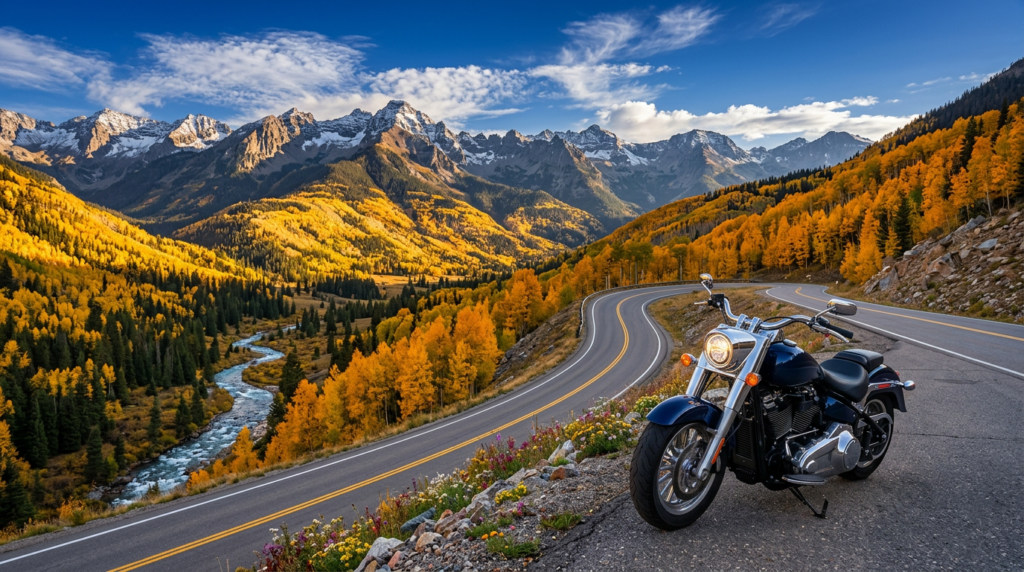
Colorado motorcycle insurance at a glance:
Helmet: Not required (18+)
Lane filtering: Limited (legal)
Colorado’s legal minimum is still 25/50/15. That keeps your motorcycle legal. It does not make you well protected. One uninsured stop can also push you into a license suspension track, a seven-day response window, and a three-year SR-22 requirement if you need reinstatement.[1, 4, 5, 6]
Colorado also has a few rules riders regularly misread. Adults can legally ride without a helmet, but eye protection is still mandatory unless your helmet provides it. Lane splitting is still illegal, while limited lane filtering is allowed only in very specific stopped-traffic conditions and is scheduled to repeal on September 1, 2027 unless extended.[1]
This guide is written for riders who want something usable, not vague. It explains Colorado’s motorcycle insurance rules, enforcement system, penalties, claims framework, and quote-shopping traps using primary Colorado sources and a WordPress-friendly format.
Colorado’s minimum coverage is easy to memorize. The dangerous part is assuming it is enough.
For a street-legal motorcycle in Colorado, the compulsory-insurance rule sits in C.R.S. § 42-4-1409. The minimum liability limits themselves are in C.R.S. § 42-7-103(2): $25,000 for bodily injury to one person, $50,000 for bodily injury per crash, and $15,000 for property damage per crash.[1]
Colorado is not a current no-fault state. The old motor vehicle no-fault part of Title 10 was repealed, so there is no current PIP requirement for motorcycles to plug into.[2] Uninsured/underinsured motorist coverage works differently: Colorado generally requires it to be included in at least the 25/50 bodily-injury limits unless the named insured rejects it in writing, and the insurer must offer higher UM/UIM limits up to the bodily-injury liability limits on the policy.[2]
Medical payments coverage is another Colorado wrinkle. The state’s default MedPay rule does not apply to policies insuring motorcycles, autocycles, or low-power scooters. A lot of riders assume MedPay is automatically riding along on a motorcycle policy because they know it is common on car policies. Colorado law says not to make that assumption.[2]
| Coverage | Colorado minimum or default | Required for a street motorcycle? | What it does |
|---|---|---|---|
| Bodily injury liability | $25,000 per person | Yes | Pays for one other person’s injuries when you cause the crash. |
| Bodily injury liability | $50,000 per accident | Yes | Total bodily injury available for everyone else injured in the same crash. |
| Property damage liability | $15,000 per accident | Yes | Pays for damage you cause to someone else’s vehicle or other property. |
| UM/UIM bodily injury | 25/50 by default unless rejected in writing; higher limits must be offered up to your BI limits | Included unless rejected in writing | Protects you if an at-fault driver has no insurance or not enough insurance for your injuries. |
| PIP / no-fault benefits | None | No | Colorado’s no-fault motor vehicle insurance statutes were repealed. |
| MedPay | No motorcycle-specific default minimum | No | Helpful medical coverage, but motorcycle policies are exempt from Colorado’s default MedPay rule. |
That table is the legal floor. It is not a recommendation. On a bike, the gap between what the minimum policy satisfies for the state and what it actually does for an injured rider is wide.[1, 2]
Proof of insurance in Colorado: your phone works, but the database is not a substitute for being prepared.
Colorado accepts both paper and electronic proof. Under C.R.S. § 42-7-103(6.5), evidence of insurance can be shown in paper or electronic format, including on a phone or other portable electronic device. The compulsory-insurance statute also says that evidence may be presented on a cell phone or other electronic device during a lawful traffic stop or investigation.[1]
Colorado also runs the Motorist Insurance Identification Database, usually called MIIDB on DMV pages. If the state system cannot verify your coverage, the county motor vehicle office may require you to present proof before a registration transaction can be completed. Colorado DMV says registration may be delayed or denied until you provide proof.[4]
Database vs. Proof: The MIIDB is useful, but it is not magic. Colorado DMV explicitly says you still need to carry proof of insurance while driving, and that the MIIDB is a verification system rather than a substitute for carrying proof. That is why a rider whose carrier has not yet reported a new policy can still get dragged into avoidable DMV hassle even though the policy really exists.
There is also a major legal difference between not having proof in your pocket and actually being uninsured. Under C.R.S. § 42-4-1409(6), a person charged under the compulsory-insurance law is not convicted if they later produce in court a bona fide complying policy that was in force at the time of the alleged violation. The statute also allows dismissal if the clerk verifies that valid coverage existed through the insurance identification database.[1]
That means a rider who truly had coverage but could not show it immediately is in a very different position from a rider whose coverage had lapsed. The second situation can lead to suspension, reinstatement fees, and SR-22 filing requirements. The first may still be annoying, but it is not supposed to end the same way if the policy was actually in force.[1, 4, 5]
What Colorado does when you ride uninsured
Colorado treats failure to maintain or show required insurance as more than a paperwork nuisance. The compulsory-insurance statute makes violations of C.R.S. § 42-4-1409 a class 1 misdemeanor traffic offense. The statute sets a minimum mandatory fine of $500 for a first conviction and a minimum mandatory fine of $1,000 for a second or later conviction within five years.[1]
| Violation stage | Fine | Jail / community service | License / registration consequence | Reinstatement and record |
|---|---|---|---|---|
| First offense | At least $500 | 10 days to 1 year in jail; up to 40 hours of community service | Driver’s license could be suspended until adequate insurance is obtained | $95 reinstatement fee, SR-22 for 3 years, up to 4 points |
| Second offense | At least $1,000 | 10 days to 1 year in jail; up to 40 hours of community service | Driver’s license, registration, and license plates suspended for 4 months | $95 reinstatement fee, SR-22 for 3 years, up to 4 points |
| Third and subsequent offense | At least $1,000 | 10 days to 1 year in jail; up to 40 hours of community service | Driver’s license, registration, and license plates suspended for 8 months | $95 reinstatement fee, SR-22 for 3 years, up to 4 points |
That table comes from Colorado DMV’s own enforcement guidance, and it matches the structure of the statute and hearing rules. The practical takeaway is simple: the first offense is already expensive, but repeat trouble is where the damage spreads from a citation into months of registration and plate consequences.[1, 4, 5]
Seven-Day Rule: Colorado’s administrative process is another trap. If you are stopped and cannot demonstrate valid insurance at the time of the stop, Colorado says you may be served with an Affidavit and Notice of Suspension. From there, you have seven days to do one of three things: provide proof that insurance existed at the time of the offense, obtain SR-22 insurance, or request a hearing. If you do nothing, the license suspension hits on the eighth day.
If a suspension does happen, the reinstatement side matters. Colorado DMV states that SR-22 is required for reinstatement from certain suspensions, that the insurer must notify DMV of cancellation, and that a rider can upload the SR-22 through myDMV or mail it with Application for Reinstatement (Form DR 2870) and other required materials.[6]
Crashes make the problem worse. Colorado’s hearings page says that if you were in a crash without insurance, DMV can suspend your license after a hearing, require SR-22 for three years, and, if you are found at fault with damages to another person or property, require you to satisfy the additional financial-responsibility requirements on Form DR 2316.[5]
What the Colorado minimum policy actually pays for — and what it leaves on you
Take a real Colorado-style scenario. You are riding through Denver traffic and a driver turns left across your lane. Or you are headed west on I-70 and a lane change in stop-and-go traffic goes bad near the foothills. Colorado’s minimum liability policy helps satisfy the state’s legal requirement, but it still mostly protects other people from your negligence. It does not rebuild your bike, replace your helmet and jacket, or pay your own medical bills just because you were hurt.[1, 2]
If you are found at fault, the state-minimum liability policy pays up to $25,000 for one injured person, $50,000 total for bodily injury in the crash, and $15,000 for property damage you caused to others. In 2026 Colorado, that property-damage limit is especially thin. A late-model pickup, SUV, or EV can blow through $15,000 fast, even before you start talking about guardrail, signage, or other roadside damage.[1]
If the other driver is at fault, your liability coverage still does not help you. You would be looking to the other driver’s liability coverage, your own UM/UIM for bodily injury, your own collision coverage for your bike, and any medical coverage you bought. That is why minimum-only motorcycle insurance often feels fine right up until the moment a rider actually needs it.
Colorado Weather Risk: The Front Range and Eastern Plains deal with repeated hail risk, and even counties with less hail still bear meaningful hail-related insurance costs according to Colorado Division of Insurance data released in February 2026. That is homeowner-premium data, not motorcycle-claim data, but the weather signal is obvious enough: if your bike spends time outside in Colorado, comprehensive coverage deserves real attention rather than an automatic “maybe later.”[14]
Coverage upgrades that make sense for Colorado riders
Higher liability limits
A realistic step up in Colorado is 100/300/100. That is not because Colorado requires it. It is because 25/50/15 is thin the moment a crash involves significant injuries, a multi-person claim, or property damage beyond a beat-up sedan. On a motorcycle, the severity risk is rarely small.
UM/UIM bodily injury
This is one of the strongest coverages in Colorado because the state starts by including it unless you reject it in writing, and the carrier has to offer it up to your bodily-injury liability limits. Colorado also says the coverage is not reduced by setoffs from medical payments, health insurance, or other legal-liability coverage. In plain English: it is not a throwaway line item.[2]
Collision
Collision pays for your motorcycle if you dump it on a mountain descent, get clipped in city traffic, or strike another vehicle or object. Colorado’s minimum liability limits do nothing for your own bike. If you financed a newer ADV bike, sport-tourer, or touring machine, skipping collision can leave you with a loan balance and no ride.
Comprehensive
Comprehensive is the part that handles hail, theft, vandalism, fire, and many non-collision losses. In Colorado, the hail angle matters more than in a lot of states. That matters even more if the bike lives outdoors in Denver, Aurora, Pueblo, Colorado Springs, or anywhere along the Front Range storm track.[14]
Medical payments or other motorcycle medical coverage
Colorado does not have a current no-fault/PIP system for bikes, and the default MedPay statute does not apply to motorcycle policies. So if you want help with ambulance bills, ER deductibles, imaging, or other immediate treatment costs regardless of who caused the crash, you usually need to buy that protection deliberately rather than assume it is baked in.[2]
Custom parts, accessories, and riding gear coverage
Colorado riders tend to load real money into luggage systems, windscreens, heated gear, comms systems, crash protection, navigation setups, suspension upgrades, and cold-weather layers. Base actual-cash-value coverage often does a poor job of recognizing that spend. If your bike is more than stock, price accessory coverage on purpose.
Motorcycle-specific roadside assistance
Do not assume a cheap auto roadside add-on handles motorcycles well. Colorado breakdowns are often not short-hop urban tows. A disabled bike on US 50, a pass road, or the I-70 mountain corridor can turn into a specialty tow and a long delay. Read the mileage cap and vehicle-type wording.
Trip interruption
This is a quietly useful option in Colorado because riders are often away from home when a covered loss happens. A bike that becomes unridable in the San Juans or on the Western Slope creates a different problem from a commuter breakdown three miles from your garage. Trip interruption can help keep a bad weekend from becoming an expensive one.
Gap coverage
If the bike is financed or leased, gap can matter. A total loss settlement based on actual cash value may not match the loan balance on a newer machine. Colorado does not require gap by statute, but lenders commonly require more than minimum liability and many riders underestimate early depreciation.
Lay-up or storage coverage
Colorado is not Florida. Plenty of riders keep the bike insured year-round but reduce coverage during the off-season or when the bike is in true storage. That can work well, but read the endorsement carefully. You do not want to discover on a warm January day that you stripped away riding coverage when you thought you only trimmed premium.
Colorado’s helmet law is partial, not universal
Colorado does not require every adult rider to wear a helmet. Under C.R.S. § 42-4-1502(4.5), each rider or passenger under 18 on a motorcycle, autocycle, or low-power scooter must wear a protective helmet meeting the statutory design requirements. The helmet must be properly secured with a chin strap while the vehicle is in motion.[1]
For adults, the bigger forgotten rule is eye protection. C.R.S. § 42-4-232 says a person may not drive a motorcycle, autocycle, or low-power scooter on a public highway unless the person and any passenger are wearing goggles or eyeglasses with safety glass or plastic, unless the helmet itself contains qualifying eye protection. Colorado also requires passenger footrests when carrying a passenger other than in a sidecar or enclosed cab.[1]
The insurance angle is practical rather than mystical. Colorado law does not say that legal adult helmetless riding automatically voids a claim. But helmet use can still matter in damage disputes, especially in a head-injury case where the defense argues that part of the injury severity was avoidable. It also matters because Colorado does not hand motorcycle riders default MedPay the way many people assume.
Lane splitting is still illegal. Filtering is a narrow exception.
- Full lane use: Colorado gives motorcycles full use of a traffic lane, and it allows motorcycles to operate two abreast in a single lane.[1]
- Lane splitting: still illegal. Colorado bars a motorcycle or autocycle from driving between lanes of traffic or between adjacent lines or rows of vehicles.[1]
- Lane filtering: allowed only for a two-wheeled motorcycle, only when the vehicle being passed is stopped, adjacent same-direction lanes are stopped, the lane is wide enough to pass safely, the bike is traveling 15 mph or less, and conditions allow prudent operation.[1]
- When to stop filtering: once the vehicles being overtaken begin moving, the motorcycle must stop overtaking or passing under the filtering exception.[1]
- Where filtering is forbidden: not on the right shoulder, not to the right of the farthest-right lane on a non-limited-access highway, and not in an oncoming lane.[1]
- Sunset date: Colorado’s statutory filtering exception is set to repeal on September 1, 2027 unless lawmakers extend it.[1]
- Lights: motorcycles must have at least one and not more than two headlamps, and lighted lamps are required between sunset and sunrise and whenever weather or light conditions prevent clear visibility at 1,000 feet.[1]
- Mirrors: the bike must have a mirror or mirrors giving a free and unobstructed rear view for at least 200 feet.[1]
- Noise: Colorado requires an adequate muffler in constant operation and prohibits exhaust modifications that amplify noise above the original muffler output.[1]
- Hand signals: Colorado still recognizes hand-and-arm signals for left turn, right turn, and stop/decrease speed.[1]
- Dead red rule: if a signal is inoperative, stuck on red or yellow over several cycles, or fails to recognize your motorcycle or autocycle, you may proceed under stop-sign rules after stopping.[1]
- Express lanes: motorcyclists may use CDOT express lanes for free on I-25, C-470, US 36, and Central 70, but must pay the toll on the I-70 Mountain Express Lanes.[15, 16]
Licensing and endorsement basics that matter to insurance
Colorado uses two motorcycle endorsements: M for two- and three-wheel motorcycles, and 3 for three-wheel motorcycles only. You must already hold a valid Colorado driver license to add one. DMV gives two routes: written exam + instruction permit + skills test, or completion of a MOST course and presentation of the original waiver card at a driver-license office. Minors under 18 must hold a motorcycle instruction permit for 12 months before adding the endorsement.[7, 8, 9]
From an insurance perspective, this is not just paperwork. A valid endorsement helps keep the policy clean, helps avoid licensing-related claim issues, and may qualify you for carrier discounts when paired with approved training.
Motorcycles, autocycles, low-power scooters, electric scooters, and e-bikes are not the same thing in Colorado
This is where a lot of Colorado insurance confusion starts. The everyday words people use do not match the state’s categories very well, and the insurance and licensing consequences change with the category.[1, 10, 11]
| Vehicle type | Colorado definition | Insurance required? | License required? |
|---|---|---|---|
| Motorcycle | Motor vehicle using handlebars connected to the front wheel or wheels to steer, with a seat the rider sits astride, designed to travel on not more than three wheels. | Yes | Yes — Colorado license with M endorsement, or 3 endorsement for three-wheel-only operation. |
| Autocycle | Three-wheeled motor vehicle with a fully or partly enclosed seating area and safety belts for all occupants. | Yes | Yes — regular driver license; no motorcycle endorsement required. |
| Low-power scooter | Self-propelled roadway vehicle with no manual clutch, not more than three wheels, and either up to 50cc gas or up to 4,476 watts electric power. | Yes | Yes — valid driver license or minor driver license. |
| Electric scooter | Device under 100 pounds, with handlebars and an electric motor, with a maximum speed of 20 mph on a paved level surface when powered solely by the motor. | No motor-vehicle liability requirement | No motor-vehicle registration or license requirement |
| Electrical assisted bicycle | Two- or three-wheel vehicle with fully operable pedals and an electric motor not exceeding 750 watts, classified as Class 1, 2, or 3. | No motor-vehicle liability requirement | No motor-vehicle registration or license requirement |
Colorado’s low-power scooter category is especially important because many riders casually call those machines “mopeds” or “scooters” and assume the insurance rules are lighter. Colorado DMV says no: low-power scooters require a complying motor-vehicle insurance policy for registration, and the operator must have a valid driver license or minor driver license.[10]
How Colorado’s insurance system changes a motorcycle claim
Colorado is an at-fault state for motor-vehicle claims because the former no-fault part of Title 10 was repealed. In practice, that means a motorcyclist usually pursues the at-fault driver’s liability insurance rather than starting inside a current PIP system. For riders, that makes liability, UM/UIM, collision, and any purchased medical coverage far more important than many minimum-only buyers realize.[2]
Colorado also uses modified comparative negligence. Under C.R.S. § 13-21-111, contributory negligence does not bar recovery only if the plaintiff’s negligence was not as great as the other side’s negligence. In plain terms, Colorado is a 50% bar state: if your share of negligence is equal to or greater than the other side’s, recovery can be barred.[3]
Colorado’s UM/UIM statute adds a few claim-specific details worth knowing. It says the coverage is in addition to legal-liability coverage, bars several common setoffs, allows a single premium policy covering multiple vehicles to limit UM/UIM to one application per accident, and treats certain unlocatable tortfeasors as uninsured for coverage purposes. Those are real Colorado claim rules, not just generic insurance buzzwords.[2]
What usually affects the price of motorcycle insurance in Colorado
- Your age and years licensed: newer and younger riders almost always pay more.
- Your motorcycle endorsement status: Colorado’s M or 3 endorsement matters. Riding without the proper endorsement is not just a traffic issue.
- Your bike type and value: a financed touring bike, performance bike, or large ADV machine costs more to insure than an older standard or small-displacement commuter.
- Your ZIP code and storage situation: urban theft exposure, outdoor parking, and weather exposure change the risk picture.
- Commuting versus pleasure use: daily Front Range commuting is rated differently from a weekend-only bike.
- Annual mileage: more time on the road generally means more exposure to loss.
- Your driving and claims record: tickets, prior accidents, and insurance-related violations matter. Colorado’s uninsured-driving consequences also include up to four points.[4]
- Coverage choices and deductibles: adding collision, comprehensive, UM/UIM limits, accessory coverage, and lower deductibles raises premium but closes major claim gaps.
- Training: MOST completion can improve how you look to insurers and may qualify you for discounts depending on carrier rules.[7, 8]
- Colorado weather exposure: hail is not a theoretical risk here, which is one reason comprehensive pricing can move more than riders expect.[14]
- Seasonality: Colorado’s real riding season varies sharply by elevation and usage pattern, which is why lay-up or storage options can matter.
- Bundling and payment structure: multi-policy, paid-in-full, and homeowner/renter discounts can materially change the final number.
How to compare Colorado motorcycle insurance quotes without wasting time
- Quote the legal minimum and a stronger option on the same day. In Colorado that usually means comparing 25/50/15 against something like 100/300/100 so you can see the actual price jump instead of guessing.
- Hold deductibles constant. A quote with a $1,000 collision deductible is not “cheaper” than a quote with a $250 deductible in any meaningful way.
- Ask the agent to show UM/UIM explicitly. In Colorado that line item matters because it is included unless rejected and must be offered up to your bodily-injury limits.[2]
- Ask whether the motorcycle policy includes any medical coverage by default. Colorado’s motorcycle policies are exempt from the state’s default MedPay rule, so this is not a place to assume.[2]
- Ask about seasonal storage or lay-up options. Colorado riders who park part of the year can sometimes trim premium without dropping theft or weather protection.
- Confirm how accessories, OEM parts, and aftermarket parts are handled. That matters more in Colorado than many buyers think because dual-sport, ADV, and touring bikes often carry expensive add-ons.
- Check complaint history before you buy. Colorado’s Division of Insurance publishes complaint-ratio tools that let you review company complaint data rather than relying only on ad copy.[12, 13]
Colorado motorcycle insurance FAQ
Do I need motorcycle insurance in Colorado?
Yes. If the bike is street-legal and operated on Colorado public roads, you need a complying policy that satisfies the state’s minimum liability requirements. Colorado’s compulsory-insurance law also requires you to be able to show proof when a peace officer asks for it after a lawful traffic contact or during a traffic investigation.[1]
Is the state minimum enough?
Usually not. Colorado’s minimum is enough to satisfy the law, but it is weak protection for a real motorcycle loss. It does not pay for your own bike, gear, or injuries unless you add the right coverages.
Does Colorado’s no-fault or PIP law apply to motorcycles?
No. Colorado’s motor vehicle no-fault insurance statutes were repealed. Motorcycle policies are also exempt from the default MedPay rule that applies in many ordinary auto-policy discussions, so riders should not confuse Colorado motorcycle coverage with old-school no-fault language.[2]
What happens if I ride without insurance in Colorado?
A first conviction carries a minimum $500 fine, and Colorado DMV also lists possible jail time, community service, license consequences, reinstatement fees, and up to four points. A second suspension can mean four months of license, registration, and plate consequences; a third or later one can mean eight months, plus SR-22 requirements for reinstatement.[1, 4, 5, 6]
Can I use my phone as proof of insurance in Colorado?
Yes. Colorado law allows electronic proof, including display on a cell phone or other portable electronic device. DMV still recommends carrying proof because the verification database does not eliminate every roadside or registration problem.[1, 4]
Do mopeds and scooters need insurance in Colorado?
If the vehicle fits Colorado’s low-power scooter category, yes. Colorado DMV says a low-power scooter must have a complying motor-vehicle insurance policy for registration, and the operator must have a valid driver license or minor driver license. Electric scooters and electric bicycles are treated differently and are exempt from motor-vehicle registration and license requirements.[10, 11]
Does a MOST safety course lower my insurance rate?
Often, but it depends on the carrier. What is certain is that a MOST course gives you the license waiver card needed for the DMV endorsement route, which can simplify the path to a properly endorsed license. Many insurers also treat approved rider training favorably in underwriting or discount programs.[7, 8]
What if my bike is financed or leased?
Your lender will usually require more than Colorado’s minimum liability limits. Comprehensive and collision are commonly mandatory, and gap coverage may be worth considering if the bike is newer and the loan balance is high relative to actual cash value.
Does Colorado require uninsured motorist coverage on motorcycle policies?
Colorado generally requires UM/UIM to be included unless the named insured rejects it in writing. The carrier must also offer higher UM/UIM limits up to your bodily-injury liability limits. For many riders, the better question is not whether it is required by default, but how much of it to keep.[2]
Is lane splitting legal in Colorado?
No. Colorado still prohibits riding between lanes of traffic or between adjacent lines or rows of vehicles. What changed is that limited low-speed lane filtering is allowed for two-wheeled motorcycles in stopped traffic under narrow statutory conditions.[1]
Do adults have to wear a helmet in Colorado?
No, not by a universal statewide requirement. Colorado’s helmet law applies to riders and passengers under 18 on motorcycles, autocycles, and low-power scooters. Adults can legally ride without a helmet, but eye protection rules still apply unless the helmet provides it.[1]
Can motorcycles use Colorado express lanes for free?
Usually yes, but not everywhere. CDOT says motorcyclists may travel for free on the I-25 corridor, C-470, US 36, and Central 70 express lanes. The I-70 Mountain Express Lanes are different: motorcycles can use them, but they must pay the posted toll.[15, 16]
Official Colorado sources to verify this page
- Colorado Division of Insurance / DORA — Insurance consumer information
- Colorado Department of Revenue, Division of Motor Vehicles — DMV home
- Colorado Motorist Insurance Identification Database (MIIDB) — verification and enforcement page
- Colorado Revised Statutes — Colorado General Assembly statutes portal
- Colorado State Patrol MOST — motorcycle safety training
- Colorado Division of Insurance complaint-ratio tools — main page, standard report, interactive report
Sources / endnotes
- Colorado Revised Statutes 2024, Title 42 – Vehicles and Traffic. Official PDF from the Colorado General Assembly. Used for compulsory insurance (C.R.S. § 42-4-1409), minimum limits and electronic proof (C.R.S. § 42-7-103), helmet and eye-protection rules (C.R.S. §§ 42-4-1502, 42-4-232), lane use and filtering (C.R.S. § 42-4-1503), licensing/vehicle definitions (C.R.S. §§ 42-2-103, 42-1-102), and related equipment rules. https://leg.colorado.gov/sites/default/files/images/olls/crs2024-title-42.pdf
- Colorado Revised Statutes 2024, Title 10 – Insurance. Official PDF from the Colorado General Assembly. Used for UM/UIM (C.R.S. § 10-4-609), MedPay exceptions (C.R.S. § 10-4-635), and the repeal of Colorado’s former motor-vehicle no-fault system (Part 7). https://leg.colorado.gov/sites/default/files/images/olls/crs2024-title-10.pdf
- Colorado Revised Statutes 2024, Title 13 – Courts and Court Procedure. Official PDF from the Colorado General Assembly. Used for Colorado’s comparative-negligence rule in C.R.S. § 13-21-111. https://leg.colorado.gov/sites/default/files/images/olls/crs2024-title-13.pdf
- Colorado Department of Revenue, Division of Motor Vehicles — Colorado Motorist Insurance Identification Database (MIIDB). Used for Colorado’s proof-of-insurance, hearing timeline, suspension, and penalty guidance. https://dmv.colorado.gov/colorado-motorist-insurance-identification-database-miidb
- Colorado Department of Revenue — Motor Vehicle Hearings, Auto Insurance. Used for the Affidavit and Notice of Suspension process, seven-day response rule, eighth-day suspension, crash-related SR-22 requirements, and DR 2316 financial-responsibility requirements. https://cdor.colorado.gov/hearings-homepage/motor-vehicle-hearings/auto-insurance
- Colorado Department of Revenue, Division of Motor Vehicles — SR-22 and Insurance Information. Used for SR-22 filing and reinstatement details, including Form DR 2870. https://dmv.colorado.gov/sr-22-and-insurance-information
- Colorado Department of Revenue, Division of Motor Vehicles — I’m a Motorcycle Driver. Used for Colorado’s M and 3 endorsements and the two ways to add a motorcycle endorsement. https://dmv.colorado.gov/drivers/im-motorcycle-driver
- Colorado State Patrol — MOST: Motorcycle Safety Training. Used for the license waiver card information tied to MOST course completion. https://csp.colorado.gov/most-motorcycle-safety-training
- Colorado General Assembly — Motorcycles. Official legislative explainer page on motorcycles and autocycles in Colorado. https://content.leg.colorado.gov/content/motorcycles
- Colorado Department of Revenue, Division of Motor Vehicles — Low-Power Scooter. Used for low-power scooter registration, licensing, and insurance requirements. https://dmv.colorado.gov/low-power-scooter
- Colorado General Assembly — Electric Bicycles. Used for e-bike classes, electric scooter definition, and Colorado’s statement that electric bicycle and electric scooter riders are exempt from motor-vehicle registration and license requirements. https://content.leg.colorado.gov/content/electric-bicycles
- Colorado Department of Regulatory Agencies (DORA) — Insurance. General Colorado Division of Insurance consumer-information hub. https://dora.colorado.gov/consumer-protection-insurance
- Colorado Division of Insurance complaint-ratio tools. Used for quote-comparison guidance. Main page: https://www.dora.state.co.us/pls/real/ins_comp_ratio_report.main_report_page. Standard report: https://www.dora.state.co.us/pls/real/ins_comp_ratio_report.std_report_page. Interactive report: https://www.dora.state.co.us/pls/real/ins_comp_ratio_report.interactive_report_page
- Colorado Department of Regulatory Agencies — February 11, 2026 press release on Colorado insurance-cost drivers. Used for Colorado hail-cost context. https://dora.colorado.gov/press-release/governor-polis-and-division-of-insurance-we-must-find-innovative-solutions-to-save
- Colorado Department of Transportation — Using the Lanes. Used for statewide motorcycle express-lane access rules. https://www.codot.gov/programs/expresslanes/use
- Colorado Department of Transportation — I-70 Express Lanes: Idaho Springs to Empire. Used for the rule that motorcycles must pay the toll on the I-70 Mountain Express Lanes. https://www.codot.gov/programs/expresslanes/westboundi70
This article is written for March 2026. If you update it later, re-check the official sources above before changing limits, no-fault language, or registration-related insurance rules.