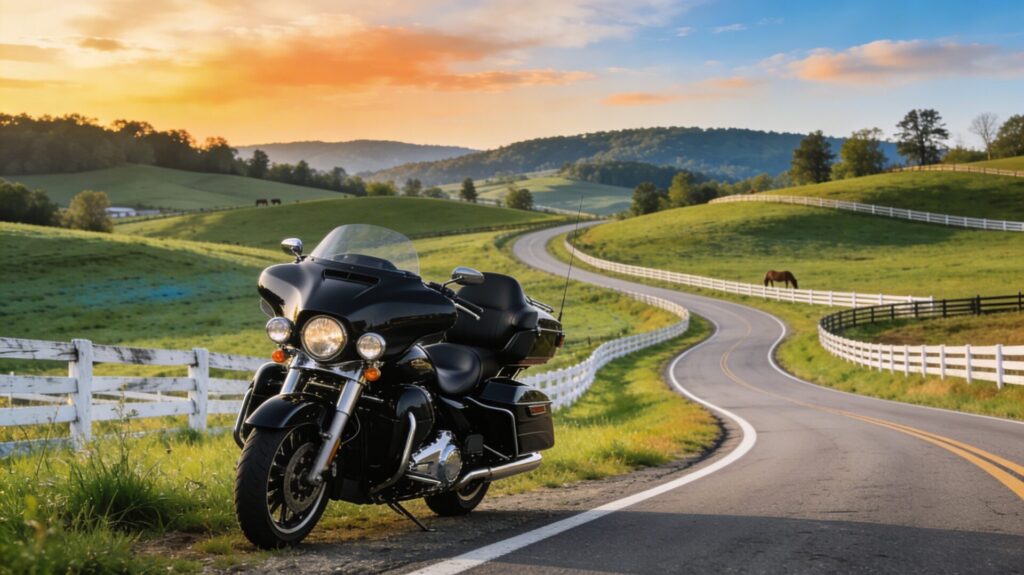
Kentucky Motorcycle Insurance at a Glance
Single Limit: $60,000
No BRB Required
1,665 Crashes in 2024
Kentucky has one of the stranger motorcycle-insurance setups in the country. The Commonwealth is a no-fault state for motor vehicles generally, but a motorcycle can be legally registered with liability-only coverage. Under KRS 304.39-110, a bike satisfies Kentucky’s security requirement with 25/50/25 liability or a $60,000 combined single limit, and KRS 304.39-110(3) specifically carves motorcycles out of the basic reparation benefits that most Kentucky drivers know as no-fault or PIP-style coverage.[1] [2] [3] [25]
That sounds cheaper until the first serious claim. Kentucky recorded 1,665 motorcycle crashes, 1,235 injuries, and 106 motorcyclist deaths in 2024. More than 900 of those crashes involved a motorcycle and at least one other vehicle. So the real question is not “What is the minimum?” It is “What does the minimum leave sitting on me after a crash?”[31]
What Kentucky actually requires on a motorcycle
The legal minimum is set by KRS 304.39-110. A Kentucky motorcycle policy can satisfy the statute with $25,000 bodily injury per person, $50,000 bodily injury per accident, and $25,000 property damage per accident. The statute also allows a $60,000 single-limit policy instead of the split-limit format. That is the coverage you need to keep the motorcycle registered and road legal in Kentucky.[1] [8]
What throws riders off is the no-fault piece. Kentucky’s basic reparation benefits, or BRB, are capped at $10,000 under KRS 304.39-020, but a motorcycle does not have to carry BRB to satisfy the statute. Instead, KRS 304.39-040 requires motorcycle insurers to make optional BRB, added reparations, uninsured motorist, and underinsured motorist coverage available for purchase. If you do not buy that optional motorcycle BRB, neither the operator nor the passenger is entitled to BRB from any source for injuries arising out of the maintenance or use of that motorcycle.[1] [2] [3]
Uninsured motorist coverage is where Kentucky gets more technical. KRS 304.20-020 says a motor vehicle liability policy generally includes UM unless a named insured rejects it in writing. At the same time, the motorcycle-specific statute says motorcycle insurers must make UM and UIM available for purchase. In practice, you should not guess. Read the declarations page and verify whether UM was accepted, rejected, or limited, and what UIM limits were actually placed on the policy.[3] [4] [27]
| Coverage | Kentucky minimum | What it means for a rider |
|---|---|---|
| Bodily injury liability | $25,000 per person / $50,000 per accident | Pays for other people’s injury damages if you are legally responsible.[1] |
| Property damage liability | $25,000 per accident | Pays for damage you cause to someone else’s vehicle or other property.[1] |
| Combined single limit | $60,000 | Alternative way to satisfy Kentucky’s minimum liability rule.[1] |
| Basic reparation benefits (BRB) | Not required on a motorcycle | Kentucky BRB is generally $10,000, but motorcycles are exempt from carrying it unless you buy it as optional coverage.[1] [2] [3] |
| Uninsured motorist (UM) | Not part of the bare registration minimum | Often offered by default in Kentucky unless rejected in writing, but you should verify what your motorcycle policy actually includes.[3] [4] |
| Underinsured motorist (UIM) | Not required | Motorcycle insurers must make it available, and it can matter a lot in an injury claim.[3] [27] |
| Medical payments / MedPay | Not required | Optional add-on that many riders use because motorcycles sit outside mandatory BRB.[3] |
How proof of insurance works in Kentucky right now
Kentucky still expects a rider to be able to show proof. Under KRS 304.39-117, insurers may issue proof of insurance in either paper or electronic form. If you just insured a newly acquired bike or changed carriers, the statute tells you to keep the paper card or a portable electronic device showing the card in the motorcycle for 45 days from the date coverage took effect and to show it to a peace officer on request.[5]
The state also runs a database side of enforcement. Kentucky DRIVE says the Kentucky Insurance System uses monthly policy records from insurers as the source for automatic verification at registration. If an insurer stops reporting coverage for a vehicle and proof is not supplied by the insurer or the owner within 90 days, the registration can be canceled. If the system cannot verify your coverage, the county clerk will require acceptable proof for manual verification.[7]
There is an important motorcycle wrinkle here. The AVIS-style database rules in KRS 304.39-117 apply to “personal motor vehicles,” and KRS 304.39-087 defines that term around private passenger vehicles and certain four-wheel vehicles. Kentucky’s broader accessible online insurance verification system was created in 2025, but the statute says it does not have to be operational for insurers until October 1, 2026 and accessible to requestors until January 1, 2027. In March 2026, the safest rule for riders is simple: keep current proof on the bike or on your phone every ride.[5] [6] [35]
Registration and titling add another practical step. Kentucky DRIVE tells county-clerk customers to bring current original proof of Kentucky insurance with an issue date within 45 days for first-time registration, in-person renewals, and titling transactions, unless the transaction qualifies for database verification or a special exception. That detail matters when you bind a policy on Friday and plan to title the bike on Monday.[37] [38]
Being unable to show proof and actually being uninsured are not the same thing. A rider can have valid coverage and still create a roadside proof problem. But once Kentucky determines the required security was not in force, the criminal penalties, registration revocation, and reinstatement steps come from Subtitle 39 and are much harsher than a simple “forgot my card” situation.[5] [8] [9]
Penalties for riding uninsured in Kentucky
Serious Consequences: Kentucky treats uninsured riding harshly with criminal penalties, registration revocation, and substantial fines.
Kentucky does not treat this as a minor paperwork issue. Under KRS 304.99-060, a first offense for the owner of an uninsured vehicle can bring a fine of $500 to $1,000, up to 90 days in jail, or both. The owner also faces registration revocation and plate suspension for one year, or until satisfactory proof is provided that the required security is now in force and will remain in force.[9]
The operator of the uninsured motorcycle can also be penalized. Kentucky allows the rider to be fined $500 to $1,000, jailed for up to 90 days, or both, and repeat violations within five years get worse. On a second or later offense within that five-year window, Kentucky can revoke the operator’s license and impose up to 180 days in jail or a fine of $1,000 to $2,500, or both.[9]
The reinstatement process is not just “buy insurance and move on.” For the registration side, Kentucky DRIVE now collects a $40 registration reinstatement fee for a revoked registration. If your driving privilege was suspended, DRIVE says a $40 reinstatement/re-licensing fee may be required on the license side as well, and paying the fee alone does not automatically restore driving privileges unless every suspension requirement has been satisfied.[8] [10]
Kentucky also has a court-monitoring feature that many riders miss. For a second or later offense, penalty reduction requires proof of insurance and a receipt showing that at least a six-month premium has been paid. The court can order the rider back at the end of that six-month period to prove the policy was renewed for another six months. If the policy cancels early or the rider fails to appear, the case can come back to life quickly.[9]
What the minimum policy pays for — and what it leaves on you
Picture a common Kentucky crash: you are riding in Lexington or Louisville, a driver turns left across your lane, and the impact throws you into the pavement. Your legal-minimum liability policy is built to pay the other person’s injury or property damage if you are the one who ends up legally at fault. It does not automatically repair your motorcycle, replace your helmet and jacket, reimburse lost wages, or absorb your orthopedic follow-up unless you bought additional first-party coverage.[1] [3]
That gap is especially risky in Kentucky because the state’s crash exposure is not theoretical. KYTC reported 1,665 motorcycle crashes in 2024, and Kentucky also reported 3,406 deer-strike crashes that year. Add in a weather pattern the National Weather Service describes as a year-round risk of tornadoes, severe thunderstorms, hail, flooding, lightning, heavy rain, and high winds, and you can see why bare liability is a thin answer for a motorcycle owner.[31] [32] [33]
There is a second Kentucky-specific problem: motorcycles sit outside mandatory BRB unless that coverage was purchased. So the standard car-insurance assumption of “my own no-fault medical money starts working first” simply does not apply to many bike claims here. If the at-fault driver has low limits, disputes fault, or has no collectable coverage, the rider with only 25/50/25 can end up exposed very fast.[2] [3] [25]
Coverage worth buying above the minimum in Kentucky
Higher liability limits
For most riders, the first smart upgrade is moving from 25/50/25 to something like 100/300/100. Kentucky DOI’s own consumer guide notes that local rating factors include medical and hospital costs, accident frequency, vehicle density, uninsured-driver conditions, and even the kinds of vehicles on the road, including larger vehicles or coal trucks. On a bike, the legal minimum can be exhausted much faster than most people expect.[1] [28]
Collision
Collision covers damage to your motorcycle after a crash, subject to deductible, whether you caused the wreck or not. In Kentucky, the Department of Insurance says a vehicle should be treated as a total loss when the damage exceeds 75% of NADA retail value. That threshold makes collision especially important on newer touring bikes, ADVs, trikes, and heavily financed models.[28]
Comprehensive
Comprehensive is the deer, theft, fire, hail, flood, and vandalism coverage. Kentucky had 3,406 reported deer-strike crashes in 2024, and NOAA’s Louisville office warns that severe weather can hit Kentucky in any season. If your bike lives outside, or you ride wooded roads around dawn and dusk, comprehensive is not fluff in this state.[32] [33]
Uninsured and underinsured motorist coverage
UM and UIM matter more on a Kentucky motorcycle than many riders realize because the bike does not automatically come with BRB and serious injury claims can outrun ordinary liability limits fast. Kentucky requires motorcycle insurers to make UM and UIM available, and the UIM statute contains detailed settlement rules that only matter if you actually bought the coverage. Matching UM/UIM limits to your bodily injury liability limits is usually a stronger choice than buying the smallest option offered.[3] [4] [27]
MedPay or optional BRB
This is where Kentucky’s motorcycle carve-out hurts if you ignore it. Optional BRB can restore some of the no-fault medical protection that cars get automatically, while MedPay can help with ambulance rides, ER care, imaging, follow-up visits, and deductibles without waiting for the liability fight to finish. Riders who assume “Kentucky is no-fault, so I’m covered” are often the ones surprised by this section of the claim.[2] [3] [25]
Custom parts, accessories, and riding gear coverage
Kentucky law only cares that you carry the required liability. It does not protect your panniers, crash bars, tuned suspension, upgraded seat, GPS mount, comms system, or custom paint. If your bike is anything other than stock, ask how much accessory coverage is included automatically and whether helmets, jackets, and boots are covered separately or only after you schedule them.[1] [28]
Roadside assistance
Roadside coverage should be motorcycle-specific, not a generic auto add-on. The useful questions are practical ones: Will the company send a flatbed or proper motorcycle trailer, how many tow miles are included, and does the benefit cover tire service, battery failures, and fuel delivery? On a bike, those details matter a lot more than the words “roadside included.”
Trip interruption
Trip interruption is a smaller coverage, but it can be worthwhile if a covered loss strands you away from home. On a Kentucky weekend ride that turns into an unplanned overnight after a covered crash, deer strike, or mechanical breakdown-related tow, this benefit can help pay for lodging and meals once the triggering conditions are met. Check the mileage trigger, because carriers often require you to be a set distance from home before the benefit starts.
Gap insurance
Gap matters if your motorcycle is financed or leased. Kentucky’s state minimum does nothing about the spread between what the bike is worth today and what you still owe the lender after a total loss. If you bought near peak market pricing or stretched the loan term, this is one of the easiest ways to avoid writing a painful check after a total-loss settlement.[1]
Laid-up or storage coverage
Kentucky’s seasonal rule is unusually important. DRIVE warns that if the registration stays active, the insurance must stay active too. If you want to cancel or significantly reduce coverage for winter storage, turn in the plate to the county clerk first and then change the policy. Dropping insurance while the registration is still active is one of the cleanest ways to trigger a Kentucky insurance violation without ever going for a ride.[8]
Helmet law: partial, not universal
Kentucky is not a universal-helmet state. Under KRS 189.285, a helmet is required for riders and passengers under 21, for anyone riding on a motorcycle instruction permit, and for anyone who has held a valid motorcycle license for less than one year. The same statute requires approved eye protection for the operator, and 601 KAR 14:010 ties approved helmets to DOT / FMVSS 218 standards and approved eye protection to Kentucky’s adopted standards.[11] [12]
The insurance angle is straightforward. Riding without a helmet can be legal in Kentucky if you meet the statutory conditions, but legality does not guarantee claim simplicity. In a serious head-injury case, fault and damage arguments can still turn on what safety equipment was or was not used. What Kentucky law does not do is require the Michigan-style extra medical coverage condition before an adult rider may go without a helmet.[11] [12]
Lane splitting, filtering, and Kentucky road rules riders miss
Kentucky does not have a statute authorizing lane splitting or stoplight filtering. The state’s lane-use and overtaking rules require vehicles to keep right when practical, pass on the left, and stay within a lane until movement can be made safely. For a public-road rider, the conservative and realistic answer is that both lane splitting and lane filtering should be treated as not permitted in Kentucky.[13] [14]
- Eye protection: required for the operator whenever the motorcycle is in motion on a highway.[11] [12]
- Mirror: a motorcycle only needs the left-side mirror required by KRS 189.130.[11] [15]
- Passengers: the bike needs a permanent passenger seat and footrests, and permit holders may not carry passengers.[11]
- Signals: a turn signal must be given continuously for at least the last 100 feet before the turn.[16]
- Exhaust: Kentucky bars exhaust modifications that amplify noise above the output of the original muffler.[17]
- Headlamps: motorcycles must have at least one and not more than two headlamps, and those lamps must comply with DOT rules.[18]
Licensing and endorsement basics that affect insurance eligibility
Kentucky’s motorcycle credential is the Class M motorcycle permit, endorsement, or license. The standard path runs through a written knowledge test, a permit-holding period, and a skills test, but Kentucky also offers a waiver route: successful completion of a qualifying RideSmartKY Basic Rider Course can waive both the written and skills tests in the approved course format. RideSmartKY also says many insurers offer a discount if the course was taken within the last three to five years, although that discount is carrier-specific rather than guaranteed.[19] [20] [24]
Motorcycles vs. mopeds vs. scooters vs. e-bikes in Kentucky
In Kentucky, the showroom label is not the real answer. The legal definition controls. The state separately defines a motorcycle, motor scooter, moped, electric low-speed scooter, and bicycle-style device, and those categories do not all carry the same insurance or licensing requirements. This is one of the easiest places for riders to make expensive assumptions.[2] [21] [22] [23] [24] [34]
| Vehicle Type | Kentucky definition | Insurance required? | License required? |
|---|---|---|---|
| Motorcycle | A motor-driven vehicle with a seat or saddle, designed for not more than three wheels, with a maximum speed over 50 mph; for registration, the term also sweeps in some related vehicle classes.[21] | Yes. Must carry the liability security required by KRS 304.39-110.[1] | Yes. Class M motorcycle permit, endorsement, or license.[19] [24] |
| Motor scooter | A low-speed motorcycle with wheels greater than 16 inches, an engine over 50cc, speed not over 50 mph, at least 2 brake horsepower, and a step-through frame or floorboard.[21] | Yes. A motor scooter operating on a highway must be insured in compliance with KRS 304.39-110, and proof must be carried while operating.[22] | Yes. Motorcycle operator’s license or motorcycle instructional permit.[22] |
| Moped | A motorized bicycle with pedals or a step-through frame, no more than 2 brake horsepower, 50cc or less, automatic transmission, and maximum speed of 30 mph.[2] [11] | No motorcycle-liability requirement under Subtitle 39, because Kentucky excludes mopeds from the relevant motor-vehicle definition.[2] | Not a Class M bike. A rider may use a Class E moped license or another valid driver credential that allows moped operation.[24] |
| Electric low-speed scooter | Covered by its own highway/bicycle-lane statute rather than Kentucky’s motorcycle statute; the operator must be at least 16 and follow local rules.[23] | No motorcycle insurance requirement under KRS 304.39 because the statute excludes electric low-speed scooters from the motor-vehicle definition.[2] [23] | No Class M requirement stated in KRS 189.289; check local operating rules.[23] |
| Bicycle-style / pedal-assist device | If it truly fits Kentucky’s bicycle rule, it is a device with an attached seat propelled primarily by human power. Some products sold as “e-bikes” will not fit that rule once speed, power, or construction changes the classification.[34] | Not under the motorcycle insurance statute if it genuinely remains a bicycle rather than a motorcycle, scooter, or moped.[1] [34] | No Class M motorcycle credential if it is legally a bicycle.[34] |
One extra Kentucky-specific point for electric riders: if the machine is legally an electric motorcycle or electric motor scooter, Kentucky DRIVE treats it as that vehicle class for registration and insurance purposes and separately imposes an annual electric motorcycle fee, which DRIVE lists as $63 beginning January 1, 2025. If the dealer is selling something unusual, verify the classification with the clerk before you assume the insurance rules.[21] [22] [36]
How Kentucky’s no-fault system changes a motorcycle claim
Kentucky is a no-fault state in the abstract, but motorcycles live in the exception that matters. KRS 304.39-060 says tort liability is “abolished” only to the extent BRB is payable, and KRS 304.39-110(3) says a motorcycle does not have to carry BRB in the first place. That means many Kentucky motorcycle injury claims function much more like ordinary fault-based claims than car claims do.[1] [3] [25]
No-Fault Caveat: Motorcycles can function outside Kentucky’s no-fault system if they do not carry basic reparation benefits, making them subject to ordinary fault-based liability.
There are several Kentucky-specific consequences. First, the usual no-fault pain-and-suffering limitation is built around BRB and statutory injury thresholds; that structure simply has less work to do when no motorcycle BRB exists unless it was purchased. Second, KRS 304.39-060 expressly says tort liability is not so limited for a passenger on a motorcycle arising out of the maintenance or use of that motorcycle. Third, a person who has no BRB at the time of the accident but has security equivalent to KRS 304.39-110 is deemed to have fully rejected those tort limitations for that accident only.[25]
Kentucky also uses a percentage-of-fault system rather than a 50% or 51% cutoff. Under KRS 411.182, the factfinder allocates a percentage of fault to each party, and a rider’s damages are reduced by that rider’s share of fault. So if a jury decides you were 20% responsible for a crash because of speed, following distance, or lane position, your recovery is reduced by 20%, not automatically erased by some hard threshold.[26]
There is one more claims trap that matters if you buy UIM. KRS 304.39-320 requires written notice of a proposed settlement with the at-fault driver’s liability carrier to be sent to all UIM insurers, and the UIM insurer then has 30 days to consent to the settlement or preserve its subrogation rights. If you settle the liability claim without handling that notice step correctly, you can damage your own UIM position. That is a real Kentucky procedure issue, not an insurance-company myth.[27]
What drives motorcycle insurance prices in Kentucky
Kentucky insurers do not price a Pikeville rider, a Louisville commuter, and a weekend rider in Paducah the same way. The Kentucky Department of Insurance’s comparison material shows premiums moving with city, mileage, violations, coverage choices, and credit-based insurance scoring, and it lists local rating factors such as vehicle density, medical and hospital costs, accident frequency, theft patterns, and even the types of larger vehicles on the road.[28]
- Rider age and years licensed: newer riders usually pay more than experienced riders.[19] [28]
- Bike type and performance: high-performance motorcycles usually cost more to insure than lower-profile models.[28]
- ZIP code: DOI comparison materials vary example premiums across Kentucky cities, not just by driver profile.[28]
- Annual mileage and commuting use: more time on the road usually means more exposure.[28]
- Driving record and claims history: accidents, citations, and DUI history can materially change pricing.[28]
- Garaging and anti-theft protection: a locked garage generally presents less theft and damage risk than open storage.[28]
- Coverage limits and deductibles: 100/300/100 with comp and collision does not price like bare 25/50/25.[1] [28]
- Safety training: many insurers give a recent rider-course discount.[20]
- Credit-based insurance scoring: Kentucky DOI explicitly says many companies use credit information in underwriting and rating.[28]
- Bundling and payment plan choices: DOI encourages shoppers to ask about discounts, multi-policy savings, and paid-in-full options.[28]
How to compare Kentucky quotes without wasting a weekend
- Quote the state minimum and one realistic upgrade. Price 25/50/25 and then 100/300/100 so you can see the actual cost difference instead of guessing.[1]
- Hold deductibles constant. If one quote uses a $250 collision deductible and another uses $1,000, the comparison is fake.[28]
- Ask how UM, UIM, and optional BRB are being handled. Kentucky motorcycle policies can look similar on the first page while being very different on medical and uninsured-driver protection.[3] [4] [27]
- Ask about storage plans before you bind. In Kentucky, you must turn in the plate before canceling coverage on a registered seasonal bike.[8]
- Ask how the company handles total losses, OEM parts, and accessories. Kentucky DOI’s guide uses the 75%-of-NADA total-loss rule, so valuation details matter.[28]
- Confirm roadside assistance is motorcycle-specific. The right tow setup for a bike is not always the same as the right tow setup for a car.
- Check complaint history and financial strength. Kentucky DOI says the complaint ratio is one useful tool, but consumers should also consider the insurer’s financial stability and outside ratings such as A.M. Best.[29] [30]
- Make sure the proof-of-insurance timing works for your clerk visit. Kentucky’s registration and titling pages repeatedly require current proof of Kentucky insurance with an issue date within 45 days for common transactions.[37] [38]
Kentucky motorcycle insurance FAQ
Do I need motorcycle insurance in Kentucky?
Yes. Kentucky requires at least 25/50/25 liability or a $60,000 single limit for a motorcycle under KRS 304.39-110. If the bike stays registered for road use, the required security has to stay in force.[1] [8]
Is the state minimum enough?
Usually not. The minimum is designed to satisfy Kentucky law, not to pay for a serious injury claim, a totaled motorcycle, or your own medical expenses after a crash. On a bike, that gap is even bigger because Kentucky does not require BRB on motorcycles.[1] [2] [3]
Does Kentucky’s no-fault law apply to motorcycles?
Not the way many riders assume. Kentucky is a no-fault state generally, but motorcycles do not have to carry BRB, and the operator or passenger gets motorcycle BRB only if that optional coverage was purchased. Many Kentucky motorcycle injury claims therefore play out in the ordinary fault system instead of the car-style no-fault structure.[1] [3] [25]
What happens if I ride without insurance in Kentucky?
A first offense can mean a $500 to $1,000 fine, up to 90 days in jail, or both. The owner also faces registration revocation and plate suspension, and repeat offenses within five years can trigger license revocation and higher penalties.[9]
Do mopeds and scooters need insurance in Kentucky?
A true Kentucky motor scooter operating on a highway does need insurance and proof of insurance in the rider’s possession. A true moped is different: Kentucky excludes mopeds from the relevant Subtitle 39 motor-vehicle definition, so the motorcycle liability statute does not apply the same way.[2] [21] [22] [24]
Does a motorcycle safety course lower my insurance rate?
Often, yes. RideSmartKY says many insurers give a discount if the course was taken within the past three to five years. The discount is not guaranteed, so ask each carrier to quote it both ways.[20]
What if my bike is financed or leased?
Expect the lender to want more than the state minimum. Kentucky only cares about liability for registration, but financing paperwork usually requires more than bare legal minimums, and gap coverage can be smart if the loan balance is higher than the bike’s actual cash value.[1]
Does Kentucky require uninsured motorist coverage on motorcycle policies?
Kentucky’s general UM statute says UM is usually included unless rejected in writing, and the motorcycle statute requires insurers to make UM and UIM available. What matters in practice is what your declarations page actually says, because the bare registration minimum is still just liability.[3] [4]
Can I show proof of motorcycle insurance on my phone in Kentucky?
Yes. Kentucky allows proof in electronic format, and the statute specifically contemplates showing the electronic insurance card to a peace officer. If you just bought the bike or changed carriers, keep that proof available for the first 45 days after coverage starts.[5]
Can I ride without a helmet in Kentucky?
Sometimes. Kentucky requires helmets for riders and passengers under 21, for motorcycle permit holders, and for riders who have held a valid motorcycle license for less than one year. If you are outside those categories, Kentucky does not impose a universal helmet requirement on you.[11] [12]
Do I have to turn in my plate if I store the bike for winter?
If the registration stays active, the insurance must stay active too. Kentucky DRIVE specifically tells owners of seasonal vehicles such as motorcycles to turn in the plate before canceling the policy if they want to avoid penalties.[8]
Can I lane split in Kentucky?
Do not treat it as legal. Kentucky has no statute authorizing lane splitting or stoplight filtering, and the state’s overtaking and lane-use rules point riders toward ordinary lane discipline instead.[13] [14]
Do electric motorcycles follow the same insurance rules?
Yes, if the machine is legally a motorcycle or motor scooter under Kentucky’s definitions. Kentucky also separately lists an annual electric motorcycle ownership fee, shown by DRIVE as $63 beginning January 1, 2025.[21] [22] [36]
Official Kentucky sources where riders can verify the rules
- Kentucky Transportation Cabinet DRIVE — Mandatory Insurance
- Kentucky Transportation Cabinet DRIVE — Vehicle Liability Insurance Verification
- Kentucky General Assembly — KRS 304.39-110
- RideSmartKY — Frequently Asked Questions
- Kentucky Department of Insurance — Consumer Complaint Ratio Help
Numbered primary sources used in this guide
- [1] KRS 304.39-110 — Required minimum tort liability insurance
- [2] KRS 304.39-020 — Definitions for subtitle
- [3] KRS 304.39-040 — Optional motorcycle BRB / UM / UIM availability
- [4] KRS 304.20-020 — Uninsured vehicle coverage
- [5] KRS 304.39-117 — Insurance card in paper or electronic format
- [6] KRS 186A.040 — Accessible online insurance verification system
- [7] DRIVE — Vehicle Liability Insurance Verification
- [8] DRIVE — Mandatory Insurance
- [9] KRS 304.99-060 — Penalties for violation of Subtitle 39
- [10] DRIVE — License Reinstatement
- [11] KRS 189.285 — Motorcycle regulations and headgear
- [12] 601 KAR 14:010 — Headgear and eye-protective devices
- [13] KRS 189.300 — Vehicles to keep to right
- [14] KRS 189.340 — Overtaking and lane rules
- [15] KRS 189.130 — Mirrors
- [16] KRS 189.380 — Signals
- [17] KRS 189.140 — Mufflers and noise regulation
- [18] KRS 189.040 — Front lights
- [19] DRIVE — Motorcycle Credentials
- [20] RideSmartKY — Frequently Asked Questions
- [21] KRS 186.010 — Motor vehicle definitions
- [22] KRS 189.2851 — Motor scooters
- [23] KRS 189.289 — Electric low-speed scooters
- [24] Kentucky Driver Manual
- [25] KRS 304.39-060 — Partial abolition of tort liability
- [26] KRS 411.182 — Allocation of fault
- [27] KRS 304.39-320 — Underinsured motorist coverage
- [28] Kentucky DOI — Auto/Home Insurance Rate Comparison Guide
- [29] Kentucky DOI — Consumer Complaint Ratio Help
- [30] Kentucky DOI — Financial strength guide
- [31] KYTC — Motorcycle and Bike Safety Awareness Month 2025
- [32] KYTC — 2025 Antler Alert
- [33] NOAA/NWS Louisville — KY Severe Weather Awareness Week 2026
- [34] 601 KAR 14:020 — Bicycle safety standards
- [35] KRS 304.39-087 — Definition of personal motor vehicle
- [36] DRIVE — Electric and Hybrid Vehicle Fee
- [37] DRIVE — Vehicle Registration & Renewals
- [38] DRIVE — Vehicle Titling
This article is written for March 2026. If you update it later, re-check the official sources above before changing limits, no-fault language, or registration-related insurance rules.